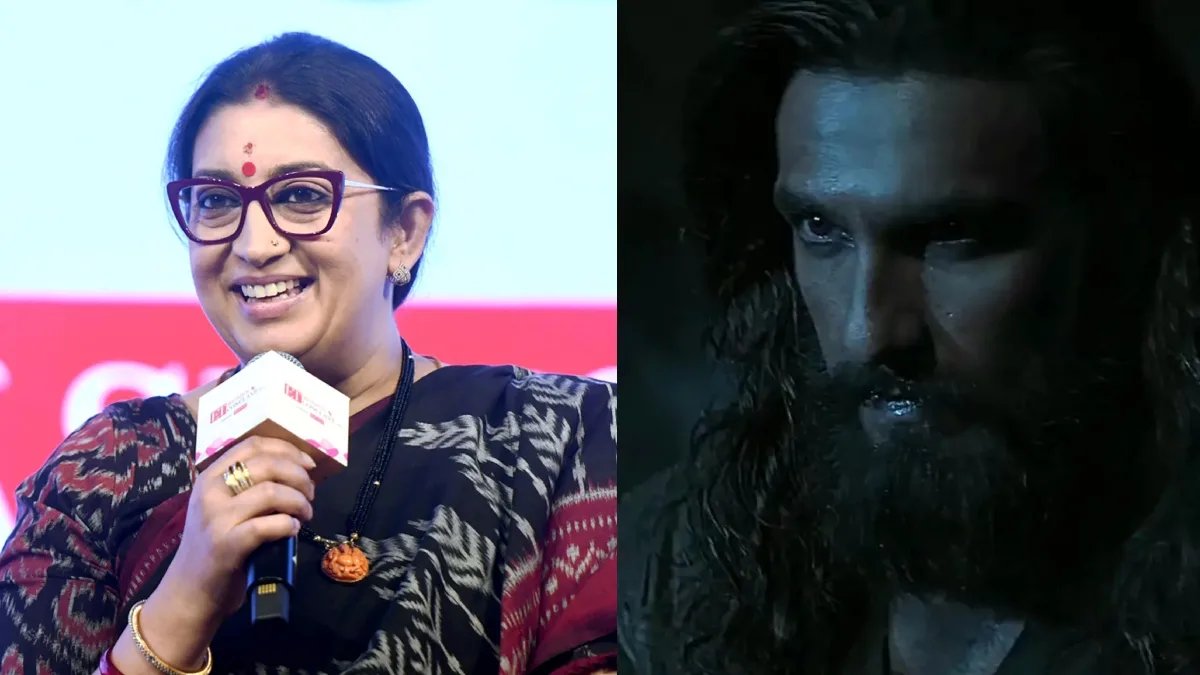
Union Minister Smriti Irani has come out in strong support of the upcoming film Dhurandhar, calling it an important story that reflects “lives lived and lost.” Her remarks come at a time when the film is facing criticism and controversy, especially after reports of bans in several Gulf countries.
Speaking at an event, Irani said that films often carry pieces of real emotions, real struggles, and real people and Dhurandhar is no exception. She explained that the movie highlights experiences that are painful but necessary to acknowledge.
“Cinema is not only entertainment,” she said. “Sometimes, it holds a mirror to society. Dhurandhar captures stories that many have lived through, and many have lost themselves in.”
Her comments appear to be a response to the growing debate around the film’s themes and political tone. Some groups have accused the movie of being overly political, while others fear it could be seen as insensitive. The controversy intensified after reports claimed that Gulf nations chose not to release the film due to concerns over its portrayal of Pakistan.
Irani, however, urged audiences to watch the film before forming opinions. She emphasized that emotional storytelling should not be mistaken for political messaging. “It is important to understand the human side of such narratives,” she said. “The film speaks of pain, resilience, and survival, things that transcend borders.”
The makers of Dhurandhar have so far remained calm amid the storm, saying they only intended to tell a compelling, character-driven story. Actors from the film have also shared how deeply they connected with the roles, with some admitting that they were inspired by real-life experiences and people.
As the conversation around Dhurandhar continues to grow, Smriti Irani’s support adds a new dimension to the debate. Whether the film becomes a box office hit or not, one thing is clear, it has already sparked national conversations about storytelling, politics, and the power of cinema.