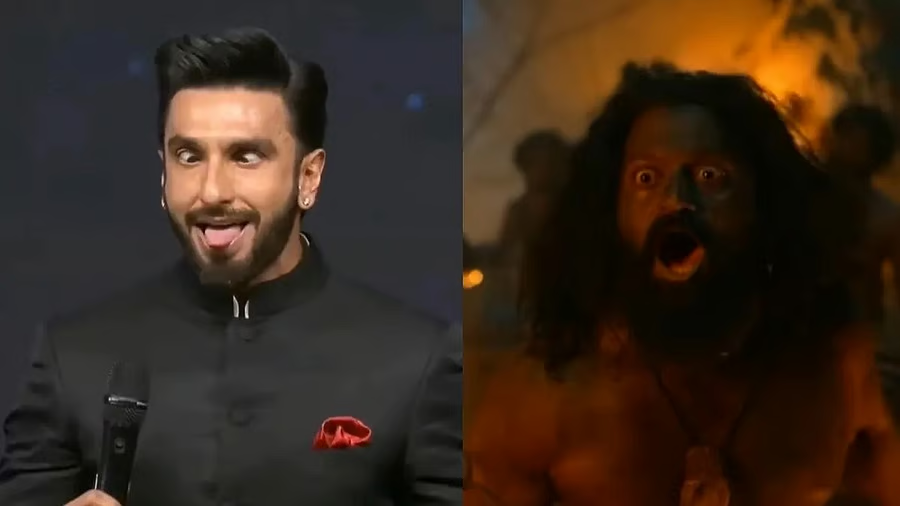
At the closing ceremony of IFFI 2025 (International Film Festival of India), a moment meant as tribute turned into a flashpoint. A clip from the event now widely shared shows Rishab Shetty raising a finger to signal “no” as Ranveer Singh attempted to mimic a dramatic sequence from Kantara.
What happened
-
Ranveer Singh came onto stage and, while greeting Shetty and others, tried to imitate the “Daiva”, a spiritual entity depicted in Kantara.
-
Shetty, seated nearby, immediately signalled to stop. Nevertheless, Singh went ahead, later on stage and during his speech, referring to the “female ghost” entering the body as part of the act.
-
Many in the audience laughed at the moment, but once the clip spread on social media, criticism soon followed.
Why it caused controversy
The reaction was sharp. Fans of Kantara and members of communities for whom the “Daiva” is sacred called the mimicry disrespectful and insensitive. They said such depiction trivialised a spiritual tradition. Calling a respected Daiva a “female ghost” added to the outrage.
Online, many expressed disappointment, saying a Bollywood star should have shown more cultural sensitivity, especially when the original actor (Shetty) had signalled against it.
Ranveer Singh’s apology
Facing intense backlash, Ranveer Singh issued a public apology the next day. He said his intention was to “highlight Rishab’s incredible performance” in the film. He added that he respects every culture, tradition, and belief in India and apologized if his actions hurt anyone’s sentiments.
In his apology, he acknowledged the sensitivity around such cultural rituals and asked for forgiveness from anyone offended.
What this means going forward
This event highlights the thin line between tribute and offense when cultural or religious traditions are involved, especially in public performances. It underlines the need for public figures to understand context before imitating or referencing culturally sensitive material.
For fans and audiences, it has renewed discussions about respect for regional traditions, representation in media, and the weight that popular figures carry when dealing with culturally important themes.