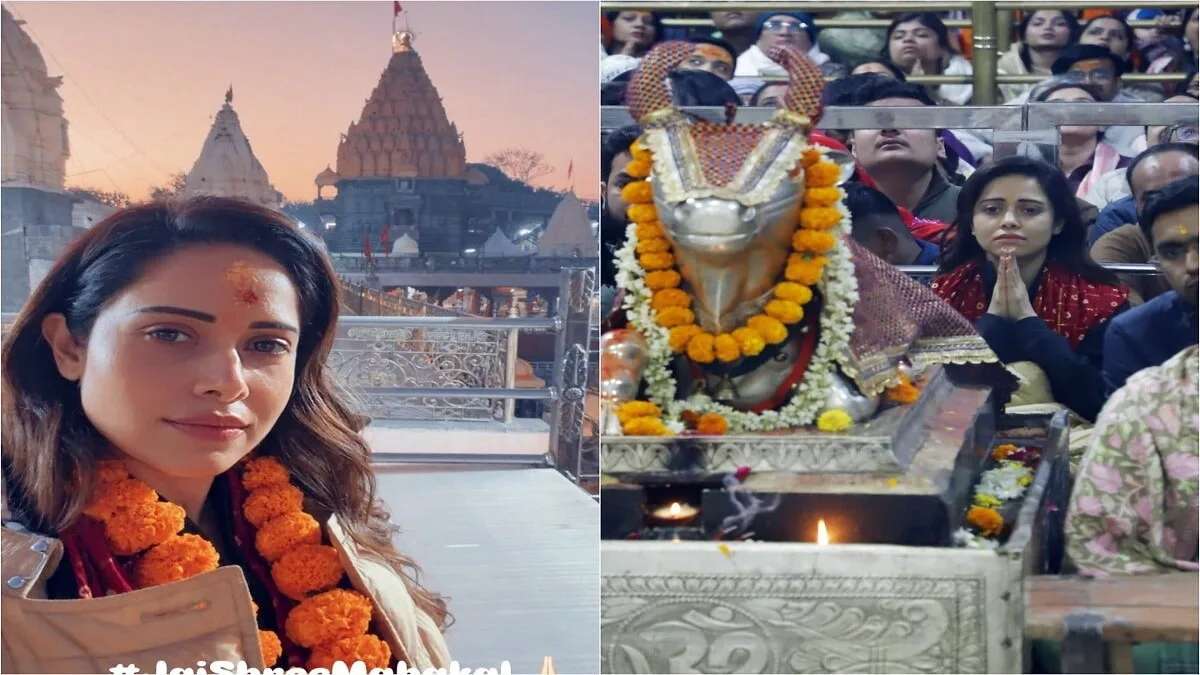
Bollywood actor Nushrratt Bharuccha is at the centre of a heated discussion after her recent visit to the Shri Mahakaleshwar Jyotirlinga Temple in Ujjain, Madhya Pradesh. The visit, which took place just before the New Year, drew praise from many devotees but also criticism from a senior Muslim cleric.
The actress visited the famous temple to seek blessings ahead of the New Year 2026 and took part in the early-morning Bhasma Aarti, a traditional Hindu ritual. She offered prayers, performed customary rituals, and received a ceremonial stole from the temple priests, expressing how peaceful and calm she felt during the visit.
Cleric Calls the Visit a “Grave Sin”
However, Maulana Shahabuddin Razvi Barelvi, National President of the All India Muslim Jamaat, strongly criticised her actions. In a statement, he claimed that a Muslim participating in temple rituals goes against Islamic principles and Sharia law, describing her actions as a “grave sin.” The cleric urged her to repent, seek forgiveness, and recite the Kalma, saying such acts are not permitted under his interpretation of Islamic teachings.
Online Debate Over Religious Freedom
The remarks sparked a wider debate online about religious freedom, personal belief, and individual choice. Many fans and social media users defended Nushrratt’s visit, highlighting that her actions should be seen as a personal spiritual choice rather than a public issue. Others felt the cleric’s comments were too harsh and not reflective of India’s long history of religious diversity and coexistence.
Nushrratt Bharuccha comes from a Muslim family but has spoken publicly about her belief in finding peace in different places of worship, including temples, mosques, and churches. In past interviews, she has described her spiritual journey as one that goes beyond a single religious boundary.
What This Means
This incident highlights the sensitivity around religious expression and celebrity influence in India. While public figures often visit religious sites for blessings or personal peace, such actions can sometimes trigger broader discussions about faith, identity, and community norms.
For now, the talk remains largely a matter of public debate and social media reaction rather than legal or official action.