New
Delhi : Vedanta Limited,
India’s leading metals, oil & gas, critical minerals, power and technology
conglomerate reaffirmed
its long-term commitment to advancing girls’ education, health and empowerment,
having positively impacted over five lakh girls across its operational regions
in India so far in FY26.
Guided by
a holistic, lifecycle-based approach aligned with the UN Sustainable
Development Goals including SDG 4 (Quality Education), SDG 5 (Gender Equality)
and SDG 3 (Good Health and Well-being), Vedanta supports girls through three
key stages of their journey: building strong foundations in early childhood
and schooling; enabling healthy, confident adolescence through
education, health and sports; and unlocking opportunities for higher
education, skills and livelihoods. These interventions are rooted in a
simple belief that when girls are educated, supported and given opportunities,
families and communities progress together.
Vedanta’s
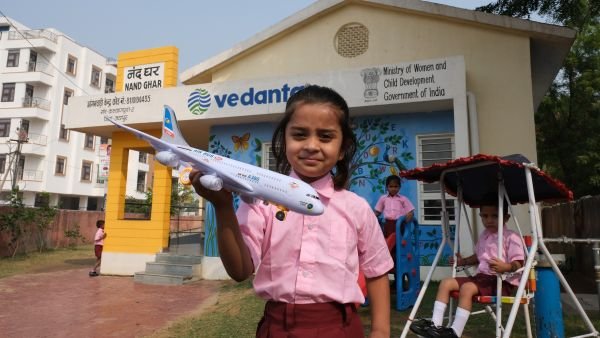
engagement begins in early childhood through its flagship Nand Ghar
programme, which has reached over 2 lakh girls through more than 11,000
modernised Anganwadi centres across 17 states. By integrating early childhood
education with nutrition, healthcare access and community engagement, Nand
Ghars lay a strong foundation for learning, health and confidence while also
empowering mothers and caregivers at the grassroots.
As girls
transition into formal schooling, Vedanta focuses on improving learning
outcomes in government schools across its operational regions. At Vedanta
Aluminium in Jharsuguda, Odisha, Project Vidyagraha adopts a digital-first
approach to deliver structured lessons and academic support, enabling students
to build confidence and improve performance. Students like Kashish Kalse, a
Class 10 student who showed significant improvement in her board examinations,
reflect the programme’s impact on academic continuity. Complementing this,
Project VIDYA strengthens learning environments through improved
student–teacher ratios and enhanced teacher capacity. Similar
interventions—Project Shiksha by ESL Steel Limited in Jharkhand, Shiksha Sambal
by Hindustan Zinc Limited in Rajasthan, and Project Vriddhi at Vedanta Sesa
Goa—support foundational and secondary education through digital access, STEM
exposure and scholarships, ensuring infrastructure and financial constraints do
not limit girls’ educational aspirations. Notably, girls constitute 50 percent
of Utkarsh Scholarship beneficiaries by Sesa Goa.
Recognising
that education cannot thrive without health and dignity, Vedanta
implements targeted interventions for adolescent girls across its locations. At
Vedanta Aluminium in Lanjigarh, Odisha, focused programmes on Adolescent
Reproductive and Sexual Health and Menstrual Health and Hygiene have
reached girls through awareness sessions, anaemia screening, nutritional
support, menstrual hygiene education and pad-making training, building
confidence and self-reliance. Further in Odisha, FACOR’s Project Laadli
is reshaping conversations around menstrual health by creating safe spaces
through Kishori Clubs, distributing hygiene kits and engaging adolescent
boys to challenge stigma. The initiative has reached community members, using
dialogue, art and storytelling to build supportive ecosystems. The impact is
reflected in stories like that of 13-year-old Sneha from Odisha, who credits
FACOR’s Project Laadli and Kishori Clubs with helping her overcome menstrual
stigma, access hygiene support and speak openly about her health with
confidence.
As girls
progress towards higher education and career aspirations, Vedanta supports
structured academic and competitive preparedness. Programmes such as Unchi
Udaan at Hindustan Zinc in Rajasthan and BALCO Connect in Chhattisgarh provide
coaching for IITs, government engineering colleges and state-level
examinations, enabling first-generation learners to compete nationally and
pursue ambitious career pathways.
Beyond
academics, Vedanta recognises the role of sports and skills in building
confidence, discipline and leadership. From India’s first residential girls’
football academy at Hindustan Zinc to the Sesa Football Academy in Goa,
where the senior women’s team has qualified for the Indian Women’s League
2026, these initiatives are enabling girls to challenge traditional norms,
build resilience and excel on competitive platforms. At the Sesa Football
Academy, players such as Aaroshi Govekar, who earned her maiden India team
call-up in 2025, exemplify how structured training and mentorship are enabling
girls from grassroots communities to compete on national platforms.
To mark National Girl Child Day and
International Education Day, schools across Vedanta’s locations organised
activities celebrating women achievers and inspiring students to reflect on
leadership, aspiration and the power of education. These efforts reaffirm
Vedanta’s commitment to empowering girls across their lifecycle and enabling
them to realise their full potential.