The second phase of FarMart's flagship farmer profitability
initiative has trained 1350+ smallholder farmers through women-led FPOs, aiming
to improve net farm income by 15-20% by integrating soil intelligence with
climate-smart agricultural advisory
Bhopal: FarMart, India's largest AI-native agri-food commerce platform, today announced the expansion of Project EverGrain into Madhya Pradesh as part of the initiative's second phase. Over the next 18 months, Project EverGrain will work directly with 1,000+ smallholder farmers across selected districts in MP, conducting 3,000 soil tests across three sowing cycles and delivering integrated soil health and climate-smart agricultural advisory through FarMart's field network and digital platform.
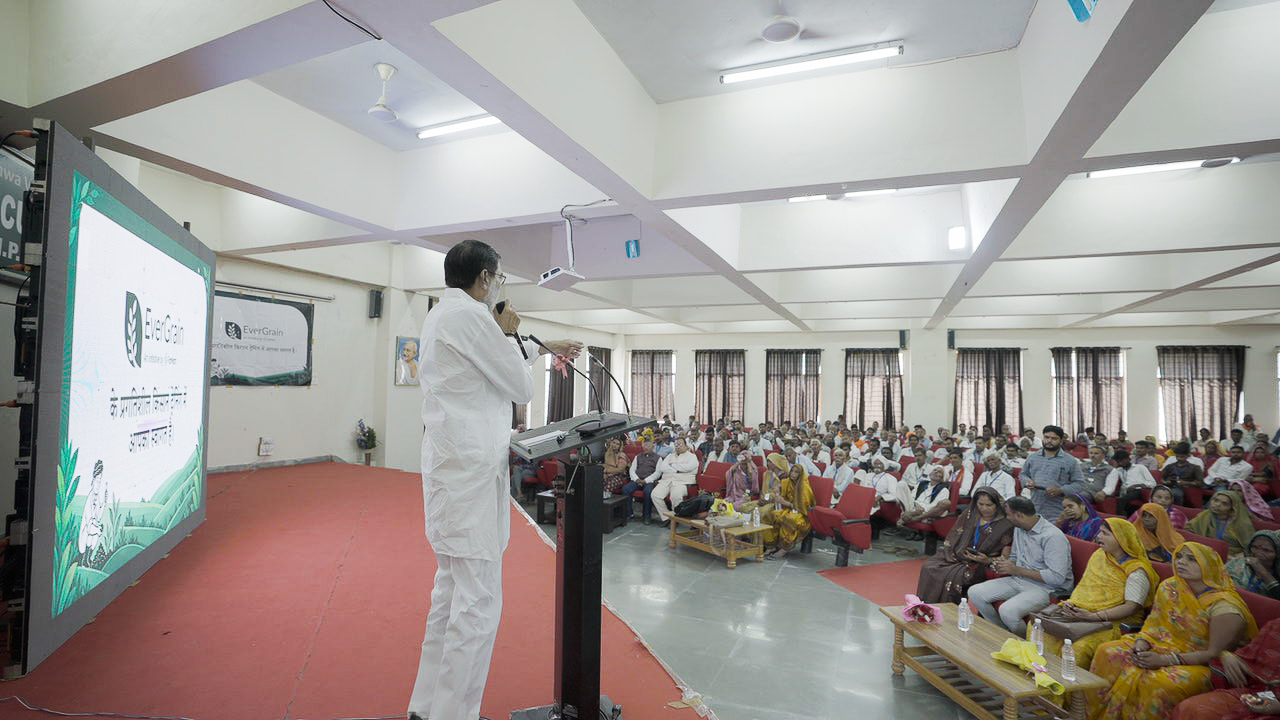
As the first step, FarMart has successfully completed the training of 1350+ farmers across Sagar [Dhana] and Tikamgarh districts, between 25th October and 28th October 2026. The training covered climate-smart agricultural practices, including climate-resilient crop choices, crop disease management, and balanced nutrient application based on soil test reports.
The announcement marks a significant evolution of the EverGrain programme, which in its first phase focused on post-harvest loss management. In its next phase, EverGrain moves upstream - addressing the decisions farmers make before the first seed is sown, with the goal of improving input efficiency, reducing avoidable costs, and building resilience against increasingly unpredictable weather conditions.
Speaking on the announcement, Tannya Garg, Director - Impact, ESG and Partnerships, FarMart said, “Madhya Pradesh sits at the heart of India's food production story - and yet the farmers who grow that food are making some of their most consequential decisions, around fertilizers, inputs, and sowing timing, without access to information that is specific to their own land. With EverGrain we aim to change that, as for the first time, farmers in these districts will have soil test results that are interpreted in the context of their own crop, their own season, and the climate conditions their fields are actually facing. Having completed the training of 1350 farmers, we now move into putting these practices to work in the field, with a clear focus on helping farmers manage water better and protect their incomes. The goal is not just to give farmers data - it is to give them a reason to act on it, and the support to do so season after season."
Why Madhya Pradesh
Madhya Pradesh is one of India's most important agricultural states and a core part of FarMart's existing procurement footprint across paddy, wheat, and soybean. Yet the state's farming communities face a persistent challenge that sits largely unaddressed: widespread soil nutrient imbalances that drive over-application of fertilizers, erode input efficiency, and ultimately compress farmer profitability.
Evidence from soil studies across MP's agricultural districts points to significant NPK imbalances - with nitrogen applied at rates far in excess of what crop and soil conditions require, while phosphorus and potassium remain deficient. For smallholder farmers, who operate on average holdings of under two hectares and have limited room for inefficiency, these imbalances translate directly into higher costs and lower yields. EverGrain is designed to close the gap between the data that already exists about MP's soil conditions and the actionable, farm-level guidance that farmers need to act on it.
What the Programme Delivers
The programme will follow a structured four-step approach across three sowing cycles covering wheat, paddy, and soybean. Soil samples will be collected from participating farmers ahead of each sowing season and tested to generate individual soil test reports capturing key nutrient levels and soil properties. These results will be interpreted by a qualified soil scientist, who will cluster farmers with similar soil profiles and develop group-specific fertilizer and nutrient recommendations that are practical and affordable to implement.
Central to Project EverGrain’s on-ground delivery in MP is a dedicated network of 15 Mitti Sakhis - local women trained specifically for this programme in soil sample collection, the interpretation of soil test results, and the communication of resulting advisory to farmers in their communities. The Mitti Sakhis serve as the primary link between the programme and the farmers it reaches, combining technical knowledge with the kind of community trust that determines whether a recommendation is actually acted upon. Their presence in the field ensures that advisory goes beyond the training session - it travels into the village, sits with the farmer, and is revisited season after season.
Building on Proven Results from EverGrain
Phase 1
EverGrain builds on a demonstrated foundation. In its first phase, implemented across Uttar Pradesh, Bihar, and Madhya Pradesh during 2025, EverGrain trained over 2,200 farmers in post-harvest management practices for paddy and wheat. The programme generated measurable results within a single crop season - average post-harvest losses declined by 1.92 kg per quintal for paddy farmers and 3.25 kg per quintal for wheat farmers. This translated into additional income of INR 4,860 per farmer in the paddy season and INR 5,687 per farmer in the wheat season.
Expected Outcomes
Across the 18-month programme, EverGrain aims to improve
participating farmer net income by an average of 15-20%, driven by a 10%
reduction in input costs per acre and a 10-15% improvement in crop
productivity. For MP's smallholder farming communities, where input costs
routinely account for a significant share of cultivation expenditure, even
incremental improvements in input efficiency represent meaningful gains in
household income.