• FAI DG Dr. S.K. Chaudhari says India will
need over 400 million tonnes of food grain by 2030 and 450 million tonnes by
2047, making ICT-driven agricultural efficiency a national imperative
• Dr. Chaudhari calls for a paradigm shift: the
fertiliser industry’s target should be the plant root, not just the farmer, a
reframing that will unlock the next wave of fertiliser innovation
• Blockchain technology flagged as a
transformative tool for end-to-end fertiliser traceability and transparency -
from port to farm gate
New
Delhi : Dr. Suresh Kumar Chaudhari, Director General,
The Fertiliser Association of India (FAI), said that India will need to produce
more than 400 million tonnes of food grain by 2030 and close to 450 million
tonnes by 2047, when the country marks 100 years of independence, making the
intelligent use of technology in agriculture and the fertiliser sector no
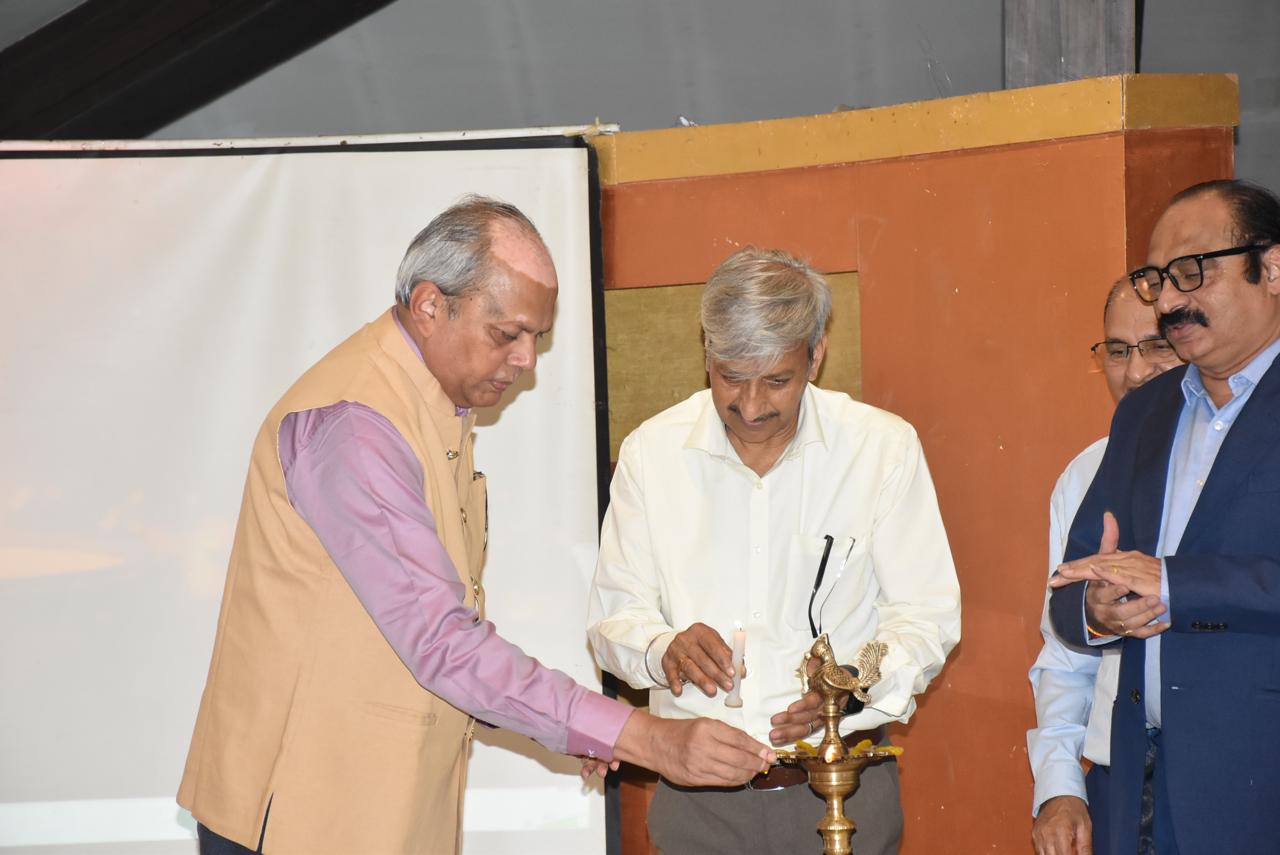
longer optional, but a national priority. He was speaking at the inauguration
of FAI’s four-day National Training Programme on ICT for Smart Fertiliser
Management at Sterling Resort Kufri, Himachal Pradesh.
Dr. Chaudhari called for a fundamental shift in
how the fertiliser industry thinks about its purpose. “Our target is not the
farmer, our target is the plant root,” he stated, adding that when the industry
orients itself around delivering the right nutrient, in the right quantity, to
the right location, at the right time, it opens the door to an entirely new
class of innovations in precision nutrition, sensor-based delivery, and
specialty fertiliser formulations. He noted that India, with its deep agrarian
knowledge base dating back to the Vedic period, is uniquely positioned to lead
this conversation globally, pointing to natural farming, organic farming,
conservation agriculture, and regenerative agriculture as frameworks that India
can offer the world.
On the transformative potential of digital
tools, Dr. Chaudhari specifically highlighted blockchain as a technology
capable of reshaping the fertiliser sector’s logistics and governance, enabling
traceability and transparency from port-of-entry to the farmer’s farm gate. He
said that ICT, when applied across the fertiliser value chain from production
planning and risk management in plants, to supply chain optimisation, remote
sensing, GIS-based soil mapping, satellite imagery, and AI-driven advisory
systems can drive meaningful gains in energy efficiency, policy compliance, and
agricultural productivity.
The four-day programme at Kufri has been
designed to cover the full spectrum of ICT applications in the fertiliser and
agriculture sectors, including blockchain for logistics, predictive analytics
for supply and demand forecasting, IoT and sensor networks for soil and crop
monitoring, precision agriculture, and the role of digital technology in Blue
Ocean Strategy. The programme draws participants from across production, supply
chain, marketing, finance, and agri-services functions of leading fertiliser
and agri-input organisations, with faculty drawn from the industry, ICAR
institutes, agri-tech startups, and consultancy organisations.