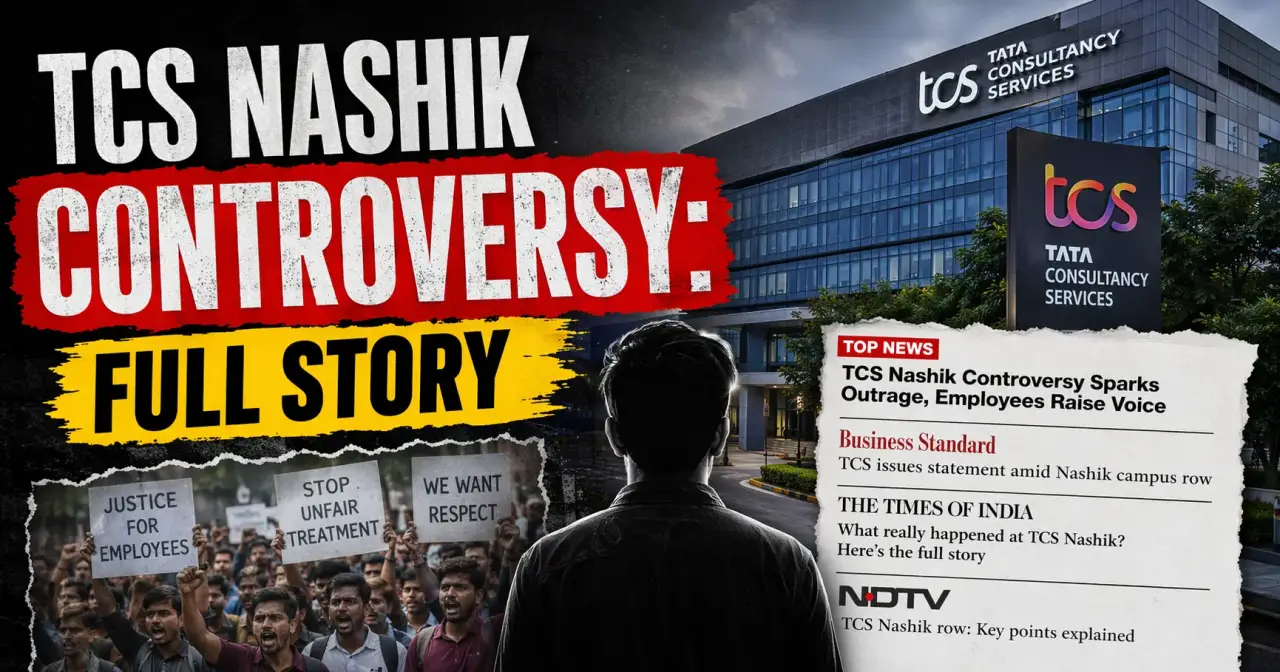
The controversy surrounding Tata Consultancy Services in Nashik is no longer just a corporate issue, it has turned into a national conversation involving workplace safety, power dynamics, and even sensitive discussions around religion.
At first glance, it may seem like just another workplace misconduct case. But as more details emerge, it becomes clear that this situation is far more complex and uncomfortable than it appears.
The Full Story: From One Complaint to a Major Investigation
The case reportedly began with a single complaint earlier this year. What followed was unexpected. As the investigation progressed, more employees, mostly young women, came forward with serious allegations.
Multiple FIRs have now been registered, and several individuals, including senior staff and HR officials, have been arrested.
The allegations include sexual harassment, mental pressure, and abuse of authority inside the workplace. Over time, investigators began to suspect that this was not an isolated incident but part of a pattern that had continued for years.
This alone would have been a major issue. But then came another layer that made the controversy even more sensitive.
The Conversion Allegations: Reality, Claims, and Questions
Some employees have alleged that they were pressured in matters related to religion, including claims of being encouraged, or in some reports, coerced, towards certain religious practices.
There are also claims of religious mockery and targeting, which have added fuel to public outrage.
However, this is where the situation becomes complicated. While allegations of coercion and pressure are being investigated seriously, there is no confirmed evidence yet of any organised or large-scale conversion conspiracy. In fact, early findings suggest that the case may be more about individual misconduct and abuse of power rather than a structured ideological agenda.
This distinction is important, but often lost in the noise of social media.
So What Is Actually Happening?
If we step back and look at the situation carefully, the core issue appears to be this:
A group of individuals allegedly misused their authority in a workplace where young employees may have felt vulnerable.
The allegations of harassment, coercion, and inappropriate behavior point strongly towards a failure of workplace culture and internal systems, especially HR and complaint mechanisms.
The “conversion” angle, while serious and sensitive, may be part of a broader pattern of coercion and control, rather than the main driver of the case.
The Bigger Concern: Failure of Systems
One of the most troubling parts of this controversy is not just what allegedly happened, but how long it may have continued. There are indications that complaints were either ignored or not handled properly.
If true, this raises serious concerns about internal accountability. Because in large organizations, the real safeguard is not just policy, it is action. When systems fail, even a reputed workplace can become unsafe.
Opinion: Why This Case Is Being Misunderstood
This is where public perception becomes important.
The internet has quickly focused on the religious angle, turning it into a larger ideological debate. But doing so risks oversimplifying the issue.
At its core, this appears to be a case of:
- Power imbalance
- Workplace harassment
- Weak internal response
The religious aspect should be investigated fully and seriously, but it should not distract from the primary issue: employee safety and accountability.
Conclusion
The TCS Nashik controversy is still unfolding, and the final truth will come out through investigation. But one thing is already clear. This is not just about one company or one office.
It is about how easily systems can fail, how long issues can stay hidden, and how quickly narratives can shift the focus away from the real problem.
In the end, the most important question is not just what happened, but why it was allowed to happen for so long.