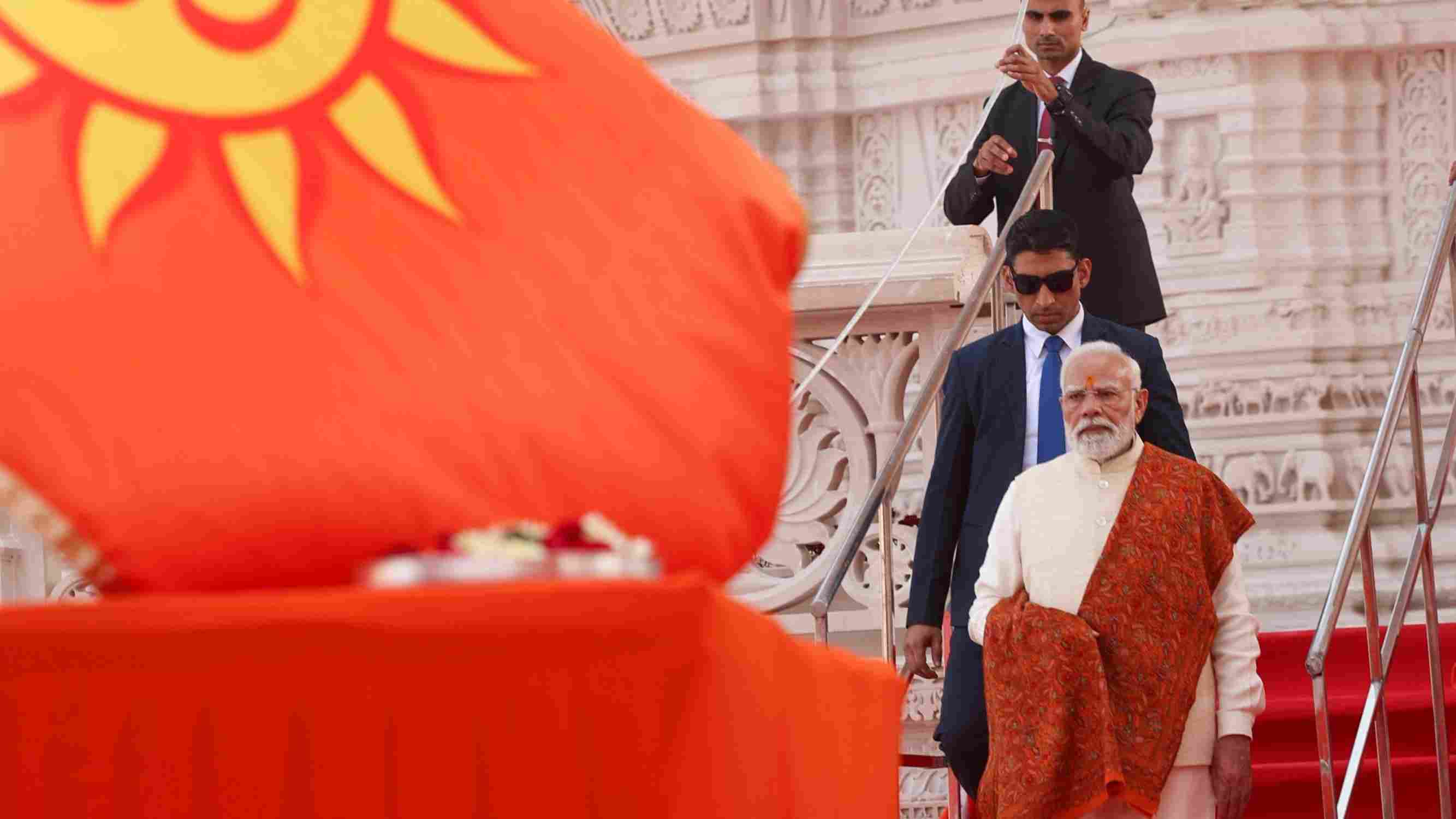
On 25 November 2025, India’s Prime Minister hoisted a saffron “Dharma Dhwaj” atop the Ram Temple in Ayodhya, marking the formal completion of the temple complex. Accompanied by leaders like RSS chief and political dignitaries, the ceremony was held in an auspicious moment known as Abhijit Muhurat.
What PM Modi Said
Addressing the gathering, Modi called the day “historic,” saying that the “wounds and pain of centuries are finally healing.”
He described the flag as more than a piece of cloth, calling it a “symbol of revival of Indian civilisation.” The saffron flag, bearing sacred symbols such as the Sun, ‘Om’, and the Kovidara tree, represents the ideals of Dharma and truth, he added. Modi said the flag hoisting fulfilled a centuries-long promise, a resolve that remained alive for 500 years. Today, he said, faith that endured through generations has been honoured.
What It Means: Unity, Pride & Cultural Renewal
PM Modi urged Indians to take pride in their heritage, drop colonial-era insecurities, and embrace their true identity. He also called Ayodhya’s transformation a symbol of national revival: a city rising not just spiritually, but as a model for a modern, developed India.
What Happened Next
The flag-hoisting completes the construction of the temple, a long journey since the landmark 2019 verdict. Devotees, pilgrims and citizens have been invited to visit, the Prime Minister encouraged everyone to come and pay respects at the temple. For many, today marks closure and for others, a new beginning: a chance for spiritual peace, national pride, and cultural reaffirmation.