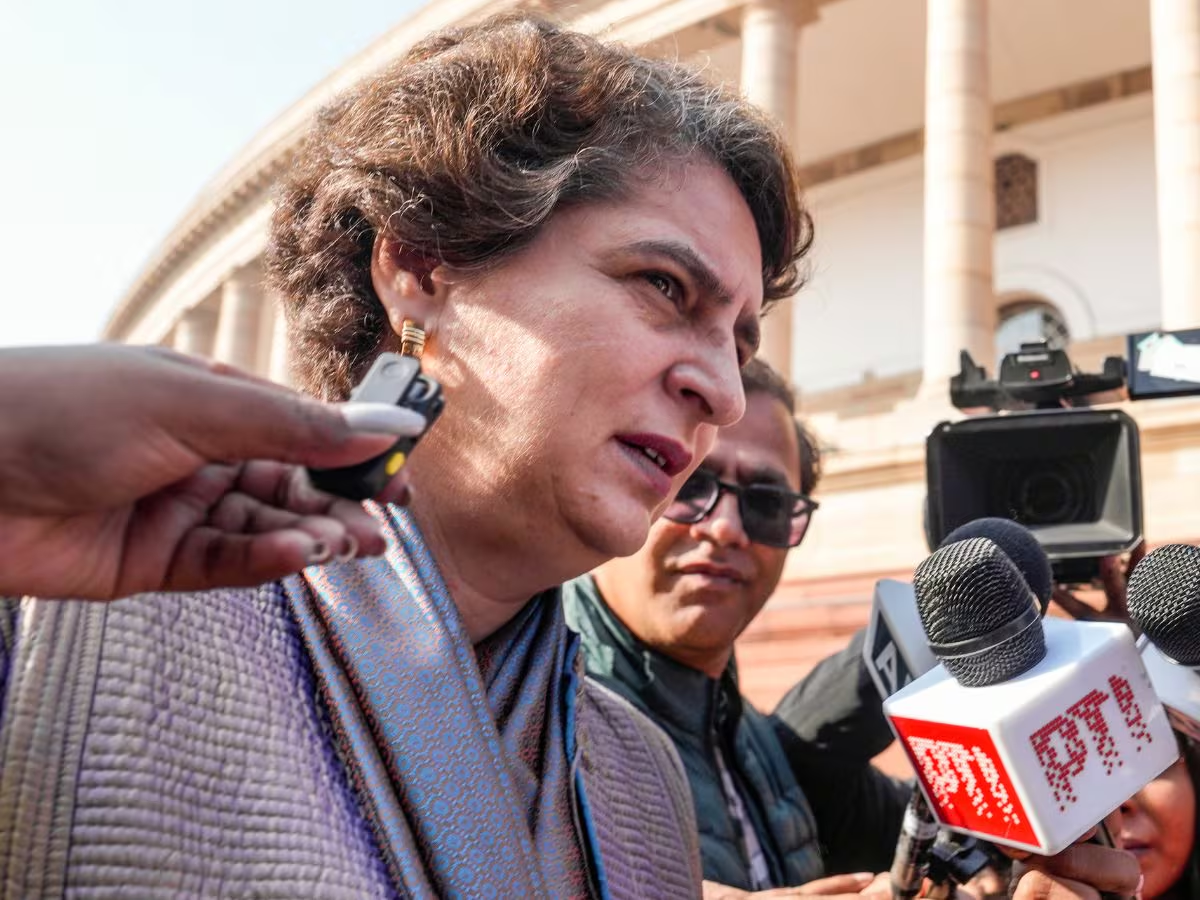
Congress leader Priyanka Gandhi Vadra has strongly opposed the government’s proposed Viksit Bharat Guarantee for Rozgar and Ajeevika Mission (Gramin) Bill, 2025 widely known as the VB-G RAM G Bill, arguing that it could weaken the existing Mahatma Gandhi National Rural Employment Guarantee Act (MGNREGA), India’s flagship rural jobs programme.
The bill was introduced in the Lok Sabha by Union Minister Shivraj Singh Chouhan during the Winter Session of Parliament and aims to replace MGNREGA with a new employment and livelihood framework. The government says the new scheme will provide 125 days of wage employment per rural household and align rural development with the vision of Viksit Bharat 2047.
However, Priyanka Gandhi and other Opposition leaders have raised serious concerns. They claim the bill undermines the rights-based guarantee of rural work that MGNREGA has provided for nearly two decades. MGNREGA currently ensures 100 days of paid work per year to rural workers willing to do unskilled manual labour.
In Parliament and outside, Priyanka Gandhi criticised the renaming and restructuring of the scheme, saying the change appears to be driven more by political motives than by genuine welfare needs. She argued that the bill has been introduced without sufficient consultation or detailed discussion, and urged the government to send it to a Parliamentary Standing Committee for further review.
Priyanka Gandhi also highlighted other concerns, including changes to how funds are allocated and the role of local bodies such as Gram Sabhas in planning work. She warned that these changes could weaken rural job security and reduce the rights of workers under the original law.
The Opposition staged protests in Parliament against the bill, objecting especially to the removal of Mahatma Gandhi’s name from the scheme, which was originally introduced in 2005 as part of efforts to support rural livelihoods and reduce poverty.
The government, meanwhile, maintains that the new VB-G RAM G Bill will modernise and strengthen rural employment initiatives, though debate and contention continue as the bill moves through the parliamentary process.