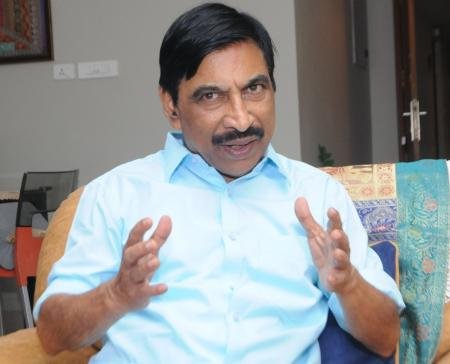
Former Archaeological Survey of India (ASI) regional director KK Muhammed has sparked fresh debate with his remarks on the long-standing Gyanvapi dispute. In a recent interview, Muhammed said that Muslims should willingly relinquish their claim over the Gyanvapi mosque area, while Hindus must also stop bringing up new religious site demands.
What KK Muhammed said
According to Muhammed, historical and archaeological evidence indicates the presence of a significant Hindu temple structure beneath the Gyanvapi mosque. He said that in such cases, “Muslims should show magnanimity and hand over the site to Hindus.”
At the same time, he stressed that Hindus should not use this issue as a precedent to demand control of other religious places, stating that “there must be a line” to avoid constant conflict.
Muhammed added that India needs a “balanced and peaceful approach” to religious disputes, and both communities should act in a way that promotes harmony.
Background on the Gyanvapi dispute
The Gyanvapi mosque in Varanasi has been the centre of a major legal and political dispute for years. Hindu petitioners have claimed that the mosque stands on the remains of a destroyed temple, while Muslim groups have opposed reopening the issue, calling it an attempt to undermine their right to worship.
Courts have ordered surveys and studies in recent years, leading to multiple public debates and political reactions.
Reactions to Muhammed’s statements
Muhammed’s remarks have drawn mixed responses:
Supporters say he is taking a historically accurate and fair position that encourages peaceful resolution.
Critics, however, argue that such statements can inflame tensions and place unfair expectations on one community.
Some Muslim organisations have said that relinquishing the site “cannot be expected” and must be decided by law, not sentiment.
Several Hindu groups welcomed his comment but did not agree with his suggestion that Hindus should halt future demands.
Political parties have responded cautiously, with most choosing not to comment directly on Muhammed’s statements.
Why the statement is significant
As a former ASI official known for his involvement in sensitive archaeological matters, Muhammed’s opinions often carry weight in public discussions. His remarks come at a time when religious site issues, such as Mathura and other disputed locations are frequently in the spotlight.
His call for both communities to act with restraint is being seen as an attempt to reduce friction at a time of rising social and political sensitivity.