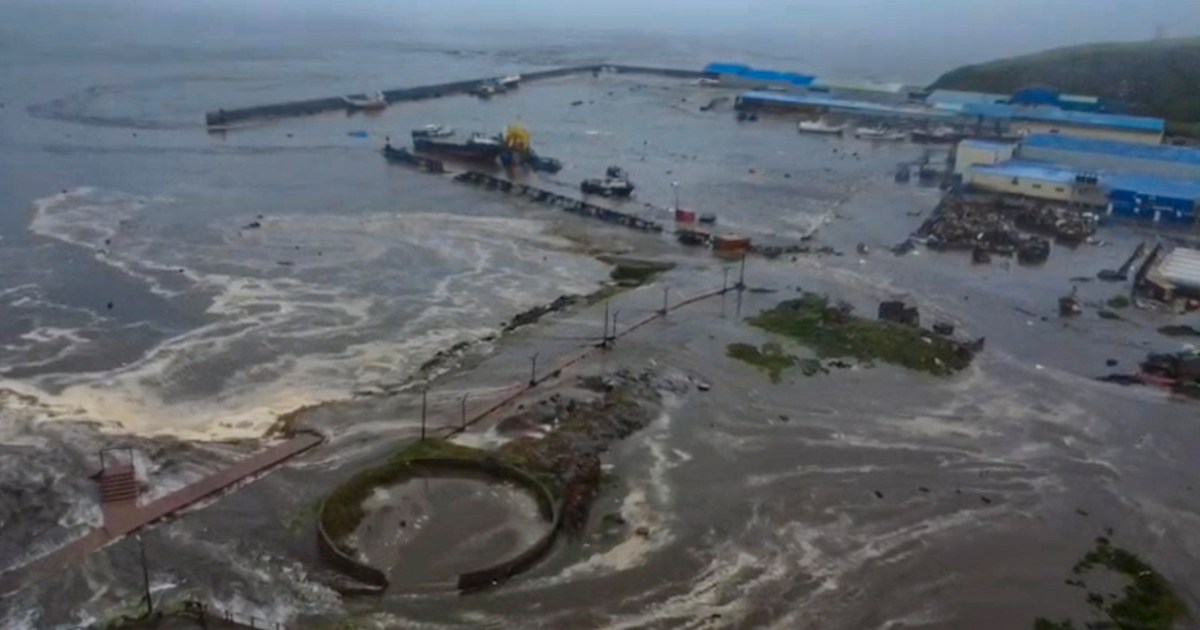
A strong Japan earthquake today has raised global concern after a powerful undersea tremor struck the northeast coast of Japan, triggering a tsunami warning across several regions.
The earthquake Japan event, measured at around 7.5 magnitude, hit off the coast of northern Japan on April 20, 2026. The quake occurred at a shallow depth of about 10 km, which made the shaking stronger and increased the risk of a Japan tsunami.
Earthquake Japan: What Happened
According to officials, the japan earthquake today trending struck near the Sanriku region in northeast Japan. Strong tremors were felt across multiple areas, including Iwate and Aomori prefectures.
The quake was powerful enough to disrupt transport systems. Bullet train services were temporarily stopped, and emergency teams were activated immediately. Authorities also formed an emergency response task force to monitor the situation closely.
Japan is located in the Pacific “Ring of Fire,” a region known for frequent seismic activity, which is why earthquake Japan incidents are relatively common.
Japan Tsunami Warning Issued
Soon after the quake, officials issued a Japan tsunami warning, alerting people living near coastal areas to move to higher ground.
Authorities warned that tsunami waves could reach up to 3 meters, which can cause serious flooding in low-lying areas.
In fact, initial tsunami Japan waves were already recorded:
- Around 80 cm waves were observed at some ports
- Smaller waves were seen in multiple coastal areas
Even smaller waves can be dangerous because they come in multiple surges and can pull people into the sea.
Evacuations and Safety Measures
Following the tsunami warning, authorities asked thousands of residents to evacuate immediately. Reports suggest that over 100,000 people were told to move to safer locations.
Emergency broadcasts repeatedly told people to stay away from coastal and river areas and move to higher ground.
Japan has one of the world’s most advanced tsunami warning systems, which can issue alerts within minutes after an earthquake.
Damage and Current Situation
So far, there are no confirmed reports of major damage or casualties. Importantly, officials said there were no issues at nuclear power plants, which is a major concern during such events.
However, authorities have warned that aftershocks may continue for several days, and people should remain cautious.
Why Japan Earthquake and Tsunami Risk Is High
Japan frequently experiences earthquakes because it sits on the boundary of several tectonic plates. This makes earthquake Japan and tsunami Japan risks higher compared to many other countries.
To reduce damage, Japan has developed advanced early warning systems for both earthquakes and tsunamis. These systems help people react quickly and save lives.
Final Take
The Japan earthquake today is a reminder of how quickly natural disasters can strike. While the situation is currently under control, the tsunami warning shows how serious such events can become.
People in affected areas are being advised to stay alert, follow official instructions, and avoid coastal zones until the Japan tsunami warning is fully lifted.