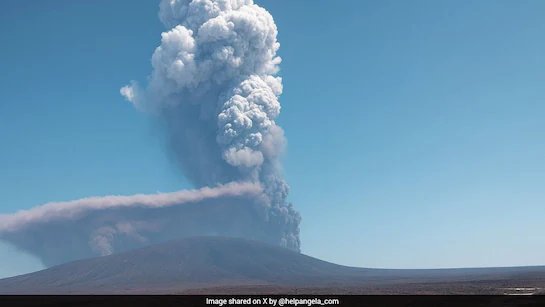
Delhi woke up to hazy skies and poor visibility this week. Weather experts confirmed that traces of volcanic ash from the Hayli Gubbi volcano in Ethiopia have travelled thousands of kilometres and have mixed with the air over North India. This unusual event has added to Delhi’s already high pollution levels.
According to the India Meteorological Department, the volcanic ash is currently moving in the upper parts of the atmosphere. Strong winds pushed the ash clouds from East Africa across the Arabian Sea and towards India. Even though the amount of ash that has reached the ground is low, it has still increased the haze and made Delhi’s air quality worse.
How the ash travelled so far
The Hayli Gubbi volcano erupted recently and released a large amount of ash into the sky. Some eruptions send ash only a short distance. However, this eruption pushed fine ash particles to higher levels of the atmosphere. These particles got caught in fast-moving winds that naturally flow from west to east.
Scientists say that these winds carried the ash over long distances. After moving over Africa and the Middle East, the ash finally reached Delhi and nearby regions. Since Delhi already had stagnant winter air and pollution from vehicles, industries and crop burning, the volcanic ash made the situation worse.
Why volcanic ash is dangerous for health
Doctors warn that volcanic ash can affect people even when the amount in the air is small. The ash contains very fine particles. These particles can enter the nose, throat and lungs. People who already suffer from breathing problems need to be extra careful.
Possible health effects
-
Difficulty in breathing
-
Burning or watering of eyes
-
Throat irritation and dry cough
-
Chest discomfort
-
Headaches
-
Worsening of asthma or heart conditions
Doctors say that volcanic ash acts like very fine dust. It does not dissolve in the air easily and stays suspended for long periods. This is why it can increase pollution levels and disturb people with sensitive lungs.
What people should do
Health experts and authorities advise people in Delhi to take precautions until the air improves. They recommend the following steps:
-
Wear an N95 or KN95 mask when going outside
-
Avoid morning walks and outdoor exercise
-
Keep windows closed
-
Use an air purifier at home if possible
-
Drink enough water
-
Wash eyes carefully if they feel irritated
Officials are watching the wind pattern. They expect the effect of the volcanic ash to reduce once winds change direction.
A reminder about global air systems
Environmental experts say this event shows how air and weather systems across the world are connected. Pollution or ash from one region can travel far away and affect people in another part of the world. They believe this is a good time to improve forecasting systems and strengthen air quality measures in big cities like Delhi.
For now, Delhi residents should follow health advice and stay updated with air quality reports from official agencies.