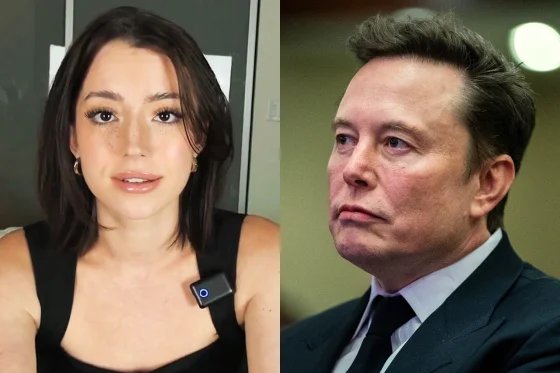
The mother of one of Elon Musk’s children has filed a legal case against his artificial intelligence company, xAI. She says the company’s AI tool “Grok” created sexually explicit and humiliating images of her without her permission, and she wants the court to stop it and award her damages.
Who Filed the Lawsuit?
The lawsuit was filed by Ashley St. Clair, a 27-year-old writer and political strategist who lives in New York. She is the mother of Musk’s 16-month-old son, Romulus.
What Is the Case About?
Ashley St. Clair says that the Grok chatbot, an AI tool developed by xAI and used on Musk’s social media platform X — allowed users to create sexually explicit deepfake images of her without her consent. Many of these images were generated by altering real photos of her, including some from when she was a child.
She claims the images:
-
were humiliating and caused emotional distress,
-
included altered versions of her as a minor, and
-
sometimes showed her in sexualised poses or with offensive symbols.
Why She Is Suing
St. Clair says the images were created and shared even after she asked the company to stop. She says Grok’s technology should not be allowed to generate these kinds of pictures of real people, especially without their permission. She is asking the court for:
-
monetary compensation for pain, fear, and mental harm, and
-
an order to prevent Grok from making such images again.
What xAI Says
xAI has publicly denied the allegations, calling some media reports “legacy media lies”. The company has also moved part of the case to federal court and filed a countersuit, saying the lawsuit should be heard in Texas based on its user agreement.
Wider Backlash Against Grok
This lawsuit comes at a time when Grok has been criticised around the world for allowing the creation and spread of non-consensual, sexually explicit deepfake images, including images of minors. Regulators in places like California have even sent letters demanding the company stop the generation and distribution of such content.
Countries such as Malaysia and Indonesia have blocked access to Grok, and governments elsewhere are investigating whether the technology violates laws on child protection and digital safety.
Why This Matters
The case highlights growing concerns about the ethical and legal limits of AI technology, especially when it can be used to create fake images that harm real people. Many critics argue that tools like Grok must have stronger safeguards to prevent abuse and protect people’s privacy.