Tehran | January 10, 2026
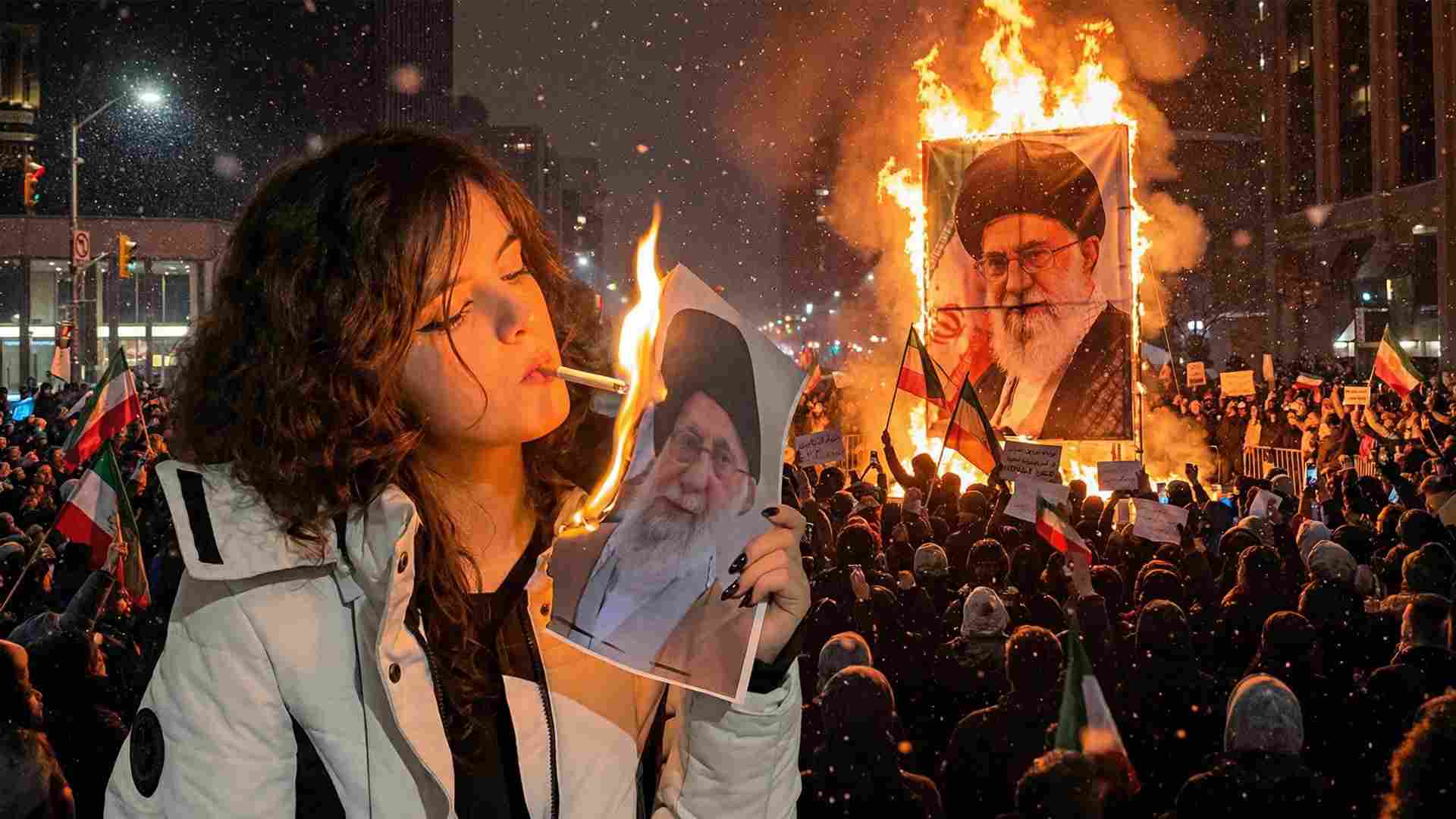
A powerful new symbol of resistance has emerged from Iran’s ongoing anti-government protests, as videos and photos of women burning pictures of Supreme Leader Ayatollah Ali Khamenei to light their cigarettes continue to go viral on social media.
The imagery, widely shared despite restrictions on internet access, shows women openly defying long-standing political and social taboos. In Iran, damaging or burning the image of the Supreme Leader is considered a serious crime, while public smoking by women has traditionally been socially sensitive and discouraged.
Symbolic Defiance
According to observers, the act is deliberately provocative, combining political dissent with social rebellion. By burning Khamenei’s photographs and using the flame to light cigarettes, protesters are making a visible statement of resistance — not only against the ruling establishment but also against strict social norms imposed on women.
The movement has gained momentum amid widespread dissatisfaction over economic hardships, including rising inflation, unemployment, and a depreciating national currency. What initially began as protests driven by financial grievances has gradually evolved into a broader movement challenging Iran’s political leadership and system of governance.
Women at the Centre of the Protests
Women have taken centre stage in the demonstrations, emerging as some of the most visible and influential participants. Many have appeared without the hijab and have openly joined acts of civil disobedience. The viral images serve as further evidence that women remain at the forefront of the protests, voicing demands for personal freedom and fundamental systemic change.
At several protest sites, slogans directed against the leadership have been reported, signalling a shift from calls for reform to outright rejection of the ruling clerical establishment.
Digital Resistance Amid Restrictions
Despite periodic internet shutdowns and increased surveillance, protest-related content continues to surface online. Experts note that powerful visual symbols, such as these widely circulated images, have become one of the most effective tools available to protesters. These visuals allow them to communicate their message domestically while also drawing international attention to their cause.
As demonstrations continue across multiple cities, authorities have yet to officially comment on the viral images showing women at the forefront of the unrest. However, the widespread circulation of such material highlights growing public discontent and the increasing difficulty faced by the government in containing opposition.
Why This Moment Matters
The emergence of these images marks a defining moment in Iran’s protest movement — one where symbolism, digital activism, and women’s resistance converge. Widely shared and discussed, the visuals have become a powerful representation of the current unrest, reflecting deep-rooted dissatisfaction across different sections of Iranian society.