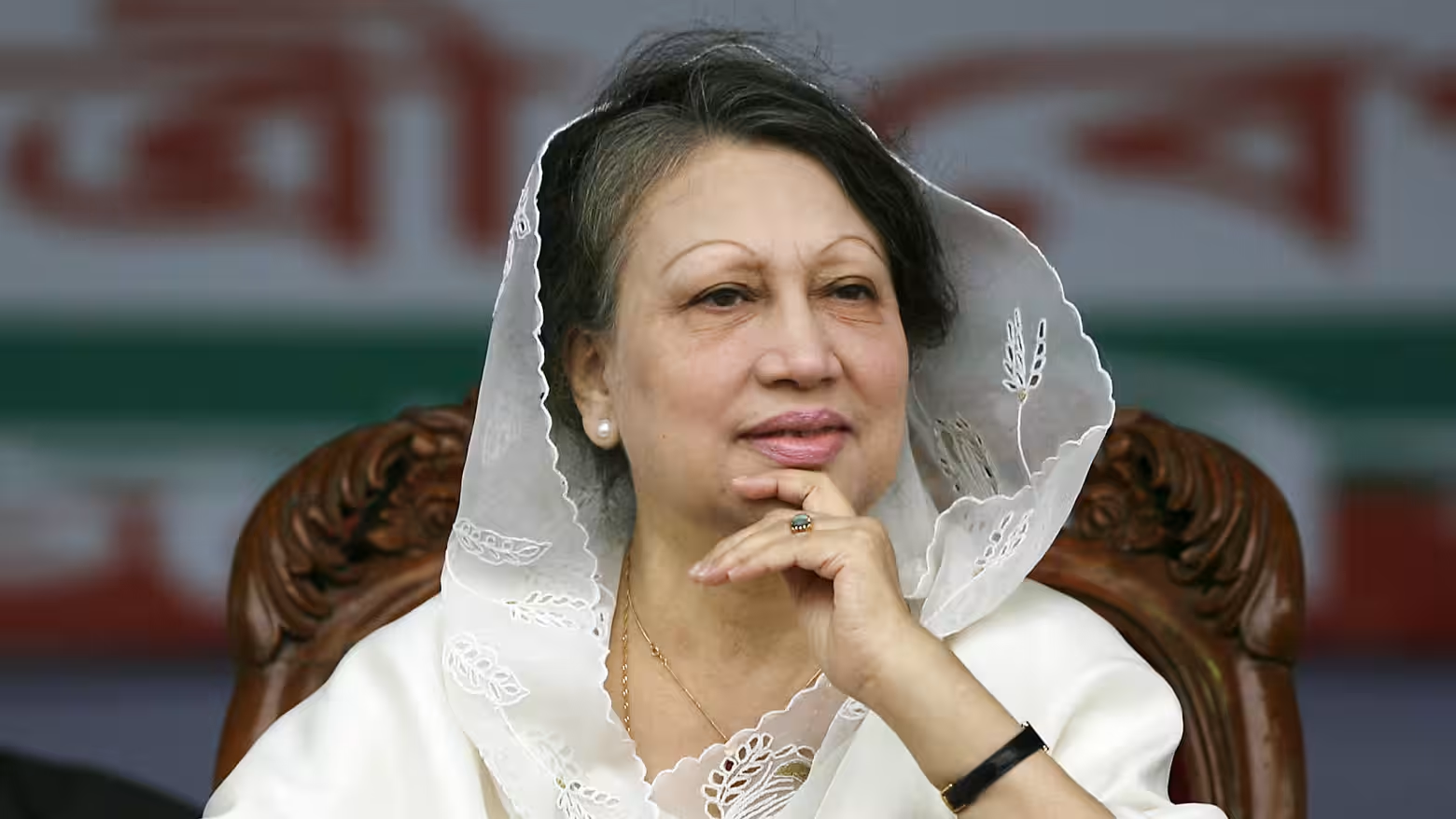
Khaleda Zia, a central figure in Bangladesh’s modern political history and the country’s first female prime minister, has died at the age of 80, her party confirmed on Tuesday.
Zia, who led the Bangladesh Nationalist Party (BNP) for decades, passed away early Tuesday morning at Evercare Hospital in Dhaka after a long battle with illness, including liver, heart and age-related health problems. She died at around 6:00 am local time, shortly after the Fajr (dawn) prayer, the party said.
Her health had been declining for some time, and she was admitted to the hospital in late November, where she received treatment for several conditions. Doctors placed her on ventilator support earlier this month as her condition worsened.
A Pioneering Political Career
Khaleda Zia made history in 1991 when she became the first woman to serve as prime minister of Bangladesh. She held the position twice, first from 1991 to 1996 and then from 2001 to 2006, shaping the country’s political landscape for a generation.
Her long political rivalry with Sheikh Hasina, leader of the Awami League, defined Bangladeshi politics for decades. The two leaders alternated in power and led rival parties through elections, protests, and periods of intense tension.
Zia also guided the BNP through challenges including corruption cases and periods of imprisonment. Despite these obstacles, she remained a symbol of political resilience and influence in Bangladesh.
Reaction and Mourning
The Bangladesh Nationalist Party announced a three-day period of mourning following her death. Black flags and tributes are being displayed across the country as supporters remember her legacy.
World leaders and politicians also expressed condolences. Indian Prime Minister Narendra Modi shared grief over her passing, describing her as a leader who made important contributions to her nation and to bilateral ties between India and Bangladesh.
Khaleda Zia’s life and career marked several historic milestones. As one of the first women to lead a Muslim-majority nation’s government, she broke barriers in politics and public life. Her work in advancing education and political activism will be remembered in Bangladesh’s history.
She is survived by her elder son, Tarique Rahman, who has taken a leading role in the BNP in recent years.