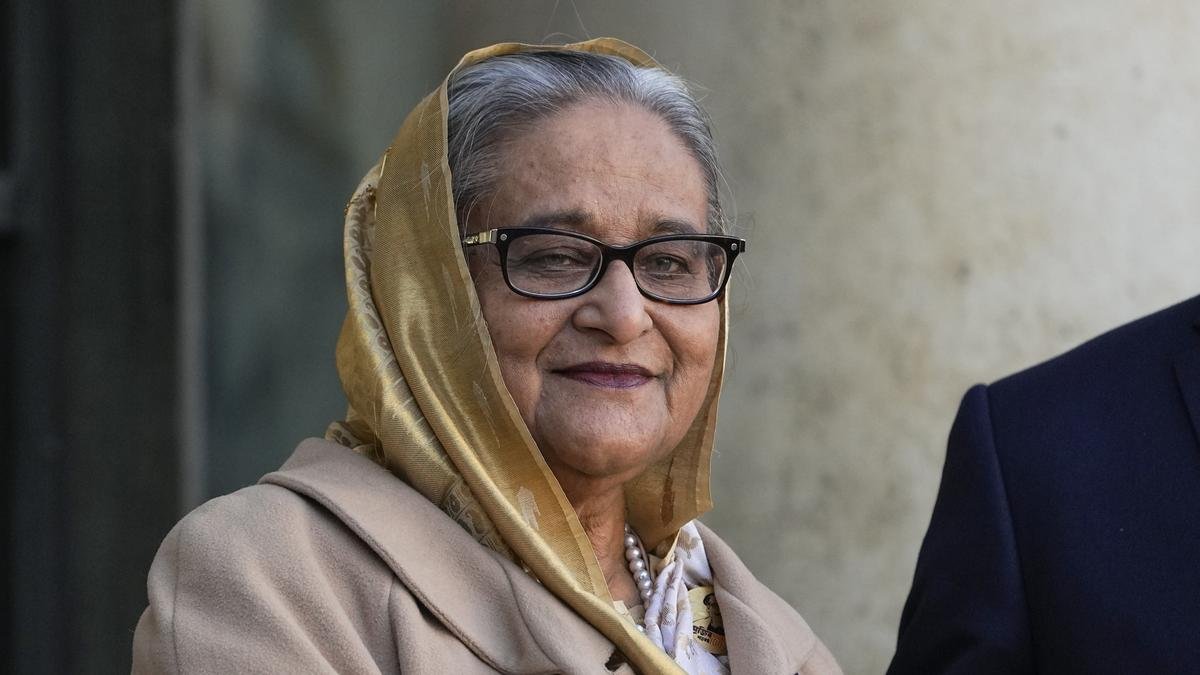
Former Bangladesh Prime Minister Sheikh Hasina has been sentenced to death by a special tribunal on charges of crimes against humanity linked to the brutal crackdown on student protesters in 2024. The verdict has triggered widespread violence, political tension, and fear across the country.
Court Announces the Verdict
The International Crimes Tribunal ruled that Hasina directly ordered the violent suppression of the student-led uprising.
The court said she was responsible for:
-
Using state forces to carry out killings
-
Allowing excessive force against unarmed protesters
-
Failing to stop the use of dangerous weapons during the crackdown
-
Creating an environment that encouraged violence
The judges stated that hundreds of people possibly more than a thousand were killed during the protests, many of them students.
Hasina, who is 78 years old, was tried in absentia as she left Bangladesh after her government collapsed.
Other Leaders Also Punished
Several high-profile figures from Hasina’s administration were also convicted:
-
Former Home Minister Asaduzzaman Khan was also given the death penalty.
-
Former Police Chief Abdullah Al-Mamun, who turned witness, received a five-year prison sentence.
The tribunal said the leadership used state machinery as a weapon against citizens.
Hasina’s Family Reacts
Hasina’s son, Sajeeb Wazed, said that his mother is safe in India and is receiving high-level protection.
He called the verdict politically motivated and said the fight for justice is not over.
He also warned that Bangladesh may face even more instability if the ruling party, the Awami League, is removed from the upcoming elections.
Violence and Tension Escalate
The verdict has led to chaos in multiple cities:
-
Protests have broken out across Dhaka
-
Arson attacks and clashes with police have been reported
-
Security forces are on high alert
-
Roads and public spaces are seeing heavy deployment
Many fear the situation could worsen in the coming days.
What Happens Next?
The government will now decide whether to carry out the sentence, delay it, or open the door for appeals.
Human rights groups have raised concerns about political bias, fairness of the trial, and possible future instability.
For now, Bangladesh stands at a critical turning point, with one of its most influential political figures facing the harshest punishment in the nation’s history.