•
Industry urged reduction of GST on household
insecticides from 18% to 5% to improve affordability and access
•
Move expected to strengthen household-level
protection against mosquito-borne diseases across Madhya Pradesh
Bhopal:
Household insecticides such as liquid vapourisers, coils, aerosols, continue to
play an important role in India’s preventive health ecosystem, particularly at
the household level where protection against vector-borne diseases remains
uneven. In a move aimed at strengthening preventive healthcare and improving
access to mosquito protection products, a delegation led by Home Insect Control
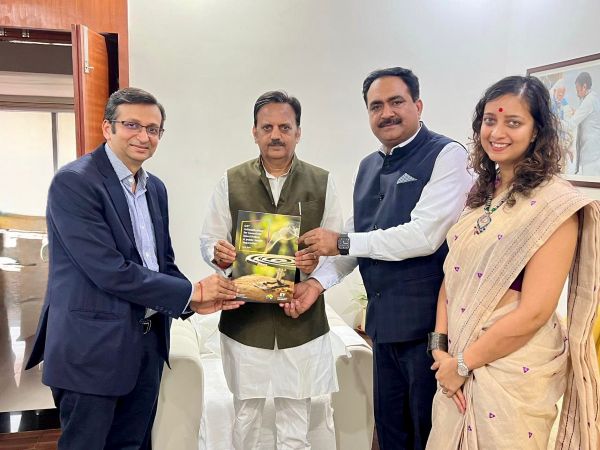
Association (HICA) met Madhya Pradesh Health Minister Shri. Rajendra Shukla to
seek support for reduction of GST on household insecticides from 18% to 5%.
The meeting follows the outcome of EY–HICA report titled
“GST rationalization for household insecticides: A public health imperative”,
which highlights the need for improved affordability and accessibility of
regulated household insecticide products, particularly among vulnerable and rural
populations.
During the meeting, the delegation highlighted the
importance of household insecticides in strengthening preventive public health
measures, particularly against mosquito-borne diseases such as dengue and
malaria.
As per National Center for Vector Borne Diseases Control,
Madhya Pradesh reported 1941 dengue cases and 2307 malaria cases in 2025. With
Madhya Pradesh witnessing recurring concerns around mosquito-borne diseases
during monsoon months, the industry noted that improving affordability of
regulated household insecticides can help strengthen household-level protection
across vulnerable communities.
Addressing the need for GST reduction on
mosquito repellents, Health Minister of Madhya Pradesh, Shri Rajendra Shukla,
said, “Madhya Pradesh has actively championed the fight against
mosquito-borne diseases. We have achieved a 97% reduction in malaria cases in
the past ten years. With health programs like EMBED (Elimination of
Mosquito-Borne Endemic Diseases), driven with the support from Godrej Consumer
Products and Family Health India (FHI), our state has progressed from high
malaria transmission (Category 3) to low transmission (Category 1) in the
National Malaria Elimination Framework, with over 3,047 villages and slums
achieving malaria free status. To sustain the fight and control on
mosquito-borne diseases, it is important that citizens have access to
affordable household insecticide products. Hence, rationalisation of GST rates at
state and central level is the approach to be considered.”
Talking about the urgent need for GST relief, Jayant Deshpande, Secretary and Director, Home Insect Control Association
(HICA) said, “Household insecticide products like liquid vapourisers are essential for
preventing mosquito-borne diseases such as malaria and dengue. However,
these products are currently taxed at 18%, making them less affordable
for consumers. At the same
time, illegal players continue to sell
unregulated products without paying taxes, creating
an uneven playing field for compliant companies. A reduction in GST would not only support the organised
sector but also make these essential products
more accessible to households, strengthening public health outcomes. Affordable products
post GST relief may increase government revenue due to higher consumption. Progressive support from states like Madhya
Pradesh can become an important starting point for broader policy consideration
around improving access to household mosquito protection products across India.”
The EY–HICA report notes that while urban penetration of
household insecticides remains high, rural adoption continues to lag due to
affordability barriers. It also highlights that the current GST structure
widens the price gap between regulated products and cheaper unregulated
alternatives, creating risks for consumer safety and market distortion.
Commenting on the potential impact
of reform, Bipin Sapra, Tax Partner, EY India said, “A reduction
of GST to 5% can materially improve
access to safe and regulated household insecticides, particularly in rural and high-risk regions.
Improved affordability could drive wider adoption, strengthen last-mile
protection against vector-borne
diseases and support
India’s broader preventive healthcare
objectives. While some input tax credit
accumulation may arise due to an inverted duty structure, the public-health and
affordability benefits of rationalisation clearly outweigh the operational challenges for industry.
The delegation also recommends introducing clearer
product classification under the GST framework to improve affordability,
support formalisation and strengthen India’s vector-borne disease prevention
efforts.