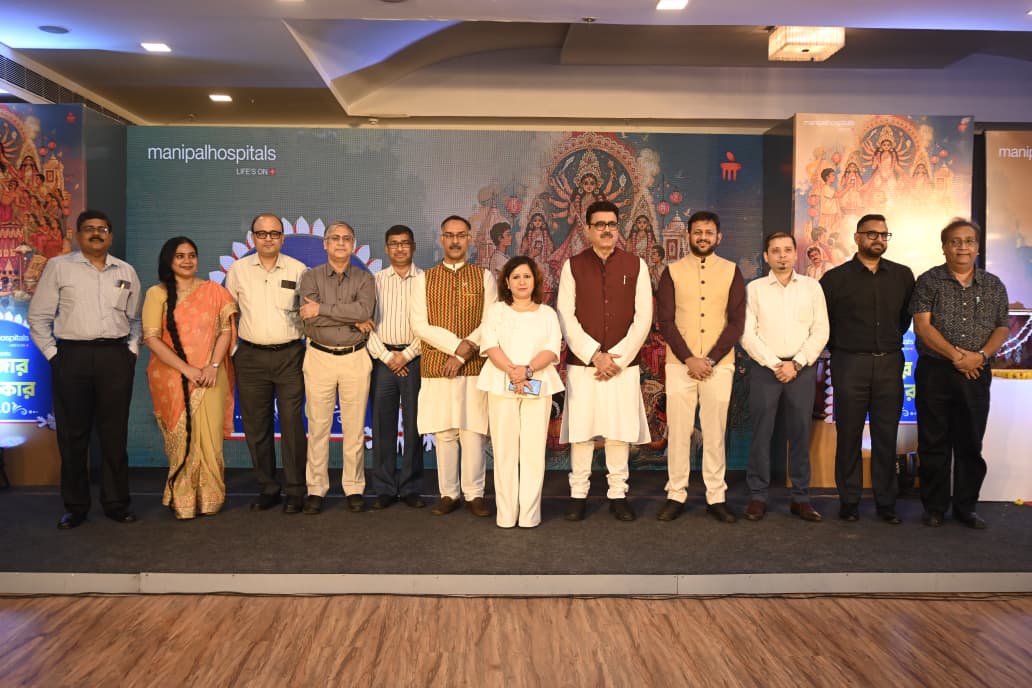
Kolkata: As Bengal prepares to welcome Maa
Durga, Manipal Hospitals Kolkata brought together the artisans and craftspeople
who give shape, light and rhythm to the state’s most celebrated festival
through ‘Pujor Rupokar 2.0’, an initiative dedicated to honouring the
unsung creators behind Durga Puja. The event brought together artisans from
Kumartuli, Chandannagar’s light artisans, dhakis and secretaries from
pandal associations recognising their invaluable contribution to Bengal’s
cultural heritage.
Durga Puja, inscribed on the UNESCO Representative List of
the Intangible Cultural Heritage of Humanity in 2021, is much more than a
festival for Bengal. Behind the grandeur of thousands of pandals, beautifully
crafted idols, elaborate lighting and the unmistakable beats of the dhak are
generations of artisans whose skill, perseverance and creativity bring the celebrations
to life.
The programme commenced with a ceremonial lamp-lighting
ceremony, attended by the leadership of Manipal Hospitals Kolkata, the
President of the Kumartuli Association, and respected doctors from across
the various units of the hospital group in Kolkata. This was followed by a
special Devi welcome act by the nursing team. The event then featured a welcome
address by Dr. Ayanabh Debgupta, Regional Director, Manipal Hospitals East,
who acknowledged the invaluable contribution of the artisans and other creators
who play a pivotal role in bringing Bengal’s grandest festival to life.
The welcome address was followed by a special felicitation
ceremony honouring the artisans of Kumartuli, traditional dhakis and
Chandannagar’s light artisans for their invaluable contribution to Bengal’s
cultural heritage. Each honouree was presented with a memento and ceremonial
shawl by the doctors. Among those felicitated were Kumartuli Sarbojonin
office-bearers Mr. Samar Mitra, Secretary, and Mr. Debasish Bhattacharjee,
Working President; Mr. Babu Paul, Mrit Shilpi and Assistant Secretary,
Kumartuli Mrit Shilpi Sanskriti Samity; national award-winning mrit shilpis Ms.
Mala Paul and Ms. Jhulan Paul; Probin Mrit Shilpi Mr. Nemai Paul; Asian Paints
award-winning sculptors Mr. Nabo Paul, Mr. Soumen Paul and Mr. Sanatan Paul,
along with Ms. Kakali Paul, Mr. Arup Paul, Mr. Pashupati Rudra Paul, Mr.
Sanjay Paul, Mr. Ramit Paul, Mr. Indrajit Paul, Mr. Ranjit Sarkar, Mr. Bankim
Paul, Mr. Dipankar Paul, Mr. Bhanu Rudra Pal, Mr. Sujit Pal, Mr. Pradip Dey,
Mr. Rudrajit Paul, Mr. Subhas Paul and Mr. Samir Paul. Representatives of
the pandal associations, Mr. Chandra Nath Dey, Secretary, and Mr. Sanu
Biswas, Treasurer, along with Chandannagar light artisans Mr. Tapan
Ghosh, Mr. Tapas Ghosh, Mr. Ashim Dey, Mr. Dibyendu Biswas and Mr. Amio Das,
were also felicitated in recognition of their dedication and craftsmanship.
During the programme, Dr. Vikash Kapoor, Cluster Director,
Orthopaedics, Manipal Hospitals EM Bypass and Mukundapur, added, “For artisans who spend long
hours bending, lifting, sitting in fixed postures or working with their hands,
musculoskeletal strain can become part of everyday life. Back, neck, shoulder
and joint problems should not be dismissed as an unavoidable part of the
profession. Ergonomics, taking short breaks, maintaining correct posture and
seeking timely medical attention can help them continue their craft without
compromising their mobility and quality of life.”
Dr. Debottam Bandyopadhyay, Consultant, Gastroenterology,
Manipal Hospital Dhakuria, said, “During the months leading up to Durga Puja, artisans often work
through irregular schedules and may compromise on meals, hydration and rest.
This can adversely affect digestive health. Maintaining regular meal timings,
adequate hydration and avoiding excessive reliance on processed or spicy food
are simple but important steps. Preventive healthcare becomes especially
relevant for communities whose work demands long hours and significant physical
and mental commitment.”
Dr. Debraj Jash, Head of Pulmonology, Manipal Hospitals EM
Bypass and Salt Lake Cluster, said, “Artisans working with clay, paint, dust and other
materials may experience prolonged exposure to airborne particles, particularly
in enclosed or poorly ventilated spaces. Respiratory symptoms such as
persistent cough, breathlessness or wheezing should not be ignored. Appropriate
ventilation, protective measures and timely evaluation can help reduce
occupational respiratory risks and allow these craftsmen to continue their work
safely.”
Dr. Subhasis Roy Chowdhury, Director - Cathlab, Manipal Hospital Broadway, stated, “The festive season often comes with intense deadlines, long working hours, inadequate sleep and considerable physical exertion. These factors can put
additional stress on the cardiovascular system, particularly
in people who may already have underlying risk factors. Regular screening,
awareness of symptoms such as chest discomfort or unexplained breathlessness,
and timely medical intervention are critical. Health should never become
secondary to the deadline of completing a creation.”
The programme culminated in a felicitation ceremony,
where the participating doctors honoured the artisans of Kumartuli for their
craftsmanship and contribution to Bengal’s cultural heritage. The presence of
the Chandannagar light artisans and dhakis further highlighted the
diverse community of creators who work behind the scenes to make Durga Puja the
spectacle that it is.
Through ‘Pujor Rupokar 2.0’, Manipal Hospitals Kolkata
reaffirmed its commitment to celebrating not just the festival, but also the
people behind it. The initiative seeks to shine a light on those whose
creativity, craftsmanship and dedication continue to give Bengal’s biggest celebration
its distinctive identity, while reminding them that those who create for the
community must also find time to care for themselves.