·
Study maps
Pune’s freshwater fish supply chain and estimates that 37-40 tonnes of
freshwater fish enter the city’s market every day
·
Research
highlights the need for greater monitoring of microplastic pollution in
freshwater ecosystems and its implications for food safety
Pune:
Plastic pollution is no longer limited to marine ecosystems. An ongoing
doctoral study at MIT World Peace University (MIT-WPU), Pune, has
detected microplastics in freshwater fish commonly consumed in the city,
highlighting the need for greater understanding of how plastic pollution moves
through freshwater ecosystems and enters the food chain.
The research is being conducted by Simran Singh,
PhD Scholar, Department of Environmental Studies, MIT-WPU, under the guidance
of Dr. Soma Mishra. The study is funded through the MIT World Peace
University Seed Grant and focuses on commercially consumed freshwater fish,
particularly Rohu and Tilapia, to examine the occurrence,
characteristics and potential sources of microplastic contamination, as well as
its implications for freshwater ecosystems and human health.
The research began with a detailed mapping of Pune’s
freshwater fish supply chain. Rather than focusing only on retail markets, the
researchers surveyed major wholesalers and distributors, which serve as key
entry points for freshwater fish into the city. Pune was divided into four
geographical zones for the survey, covering the city’s major distribution
networks.
The researchers interviewed 26 wholesalers and
distributors across Pune. Based on the survey, the study estimates that
approximately 37-40 tonnes of freshwater fish enter the Pune market every
day, with Rohu and Tilapia among the commonly traded species. A significant
proportion of the supply comes from aquaculture systems, while fish are also
transported to Pune from states and regions including Andhra Pradesh,
Gujarat, Ratnagiri, Mumbai and Kolkata, reflecting the extensive interstate
nature of the city’s freshwater fish supply chain.
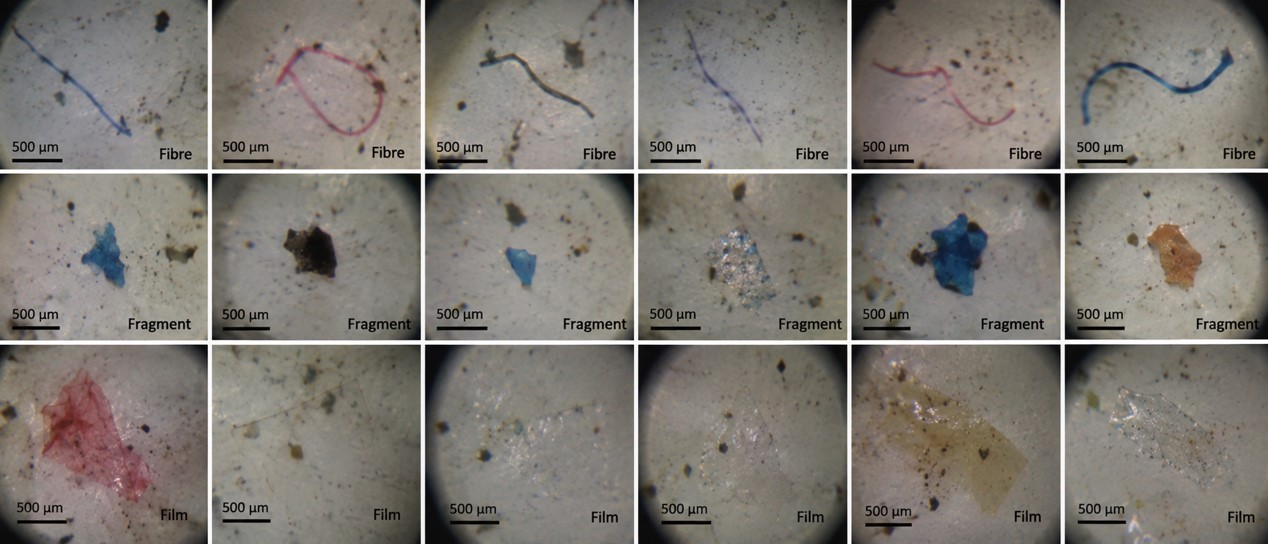
The laboratory investigation detected microplastics in
the freshwater fish samples examined. The particles identified included fibres,
fragments and pellets, which are among the commonly reported forms of
microplastics found in freshwater environments. Based on the detected levels
and local consumption patterns, the study estimates that an individual
consuming an average of 250 grams of freshwater fish twice a week over 50
years could potentially ingest between 93,600 and 124,800 microplastic
particles.
The researchers, however, emphasise that the particle
count cannot be directly equated to the number of plastic bottles or other
plastic items, as the mass and potential health implications depend on factors
including particle size, polymer composition and associated contaminants.
Detailed quantitative analysis and polymer characterisation are currently
underway as part of the ongoing doctoral research.
Microplastics can potentially carry or interact with a
range of chemical and biological contaminants, including plastic additives and
pollutants present in the surrounding environment. The researchers note that
understanding these interactions and the implications of long-term dietary
exposure requires further investigation, underscoring the importance of
continued surveillance and scientific research into microplastic contamination
in freshwater food systems.
Simran Singh, PhD Scholar, Department of Environmental
Studies, MIT-WPU, said, “Most
discussions on microplastic pollution focus on marine environments. However,
freshwater ecosystems and inland cities like Pune remain relatively
understudied, despite being important sources of fish consumed by local
communities. Our objective was to understand the complete journey of fish
before it reaches consumers. Instead of surveying small retail markets, we
focused on wholesalers and distributors because they represent the primary
entry points of freshwater fish into Pune.”
The study aims to establish baseline scientific data
on freshwater microplastic pollution in Pune, a rapidly urbanising city, and
contribute to a better understanding of the pathways through which
microplastics may move from freshwater environments into the food chain. The
findings could support evidence-based approaches to plastic waste
management, wastewater management, freshwater ecosystem conservation and food
safety.
The research also received recognition at the National
Scientist Round Table Conference (NSRTC), where Simran Singh was awarded
the Third Prize for her poster presentation. The conference was held at
MIT-WPU, Pune, from 17-19 July 2026. The recognition highlights the
relevance of interdisciplinary research addressing the intersection of
environmental pollution, public health and sustainable development.
“Plastic pollution is no longer just an environmental
issue; it is becoming a food-chain issue. Understanding where microplastics
originate, how they move through freshwater ecosystems, and how they eventually
reach the fish we consume is essential for developing informed policies and
sustainable solutions,” said the
researchers.
With detailed analysis of the samples continuing, the
MIT-WPU study seeks to contribute to the growing body of evidence on
microplastic contamination in inland freshwater ecosystems and encourage
greater scientific attention towards its potential implications for aquatic
health, food systems and human well-being.