·
Industry
leaders to discuss domestic production, supply-chain diversification, energy
security and new-age technologies at FAI program in Udaipur
New Delhi : The
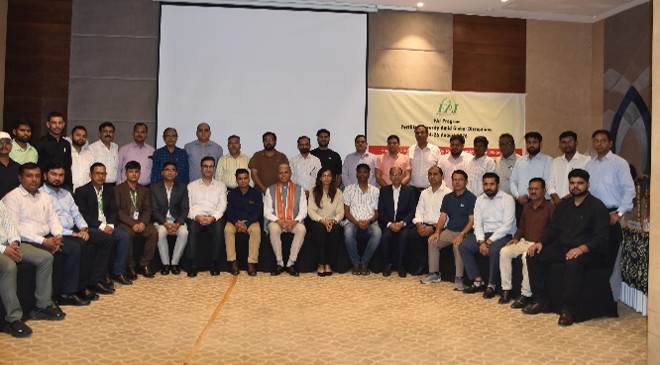
Fertiliser Association of India (FAI) is organising a three-day program on
Fertiliser Security Amid Global Disruptions from 24-26 August in Udaipur, Rajasthan
bringing together senior industry executives and sector experts to deliberate
on the emerging challenges to India’s fertiliser security and the roadmap for
building a more resilient fertiliser ecosystem. The program will focus on
global market volatility, domestic production, policy challenges, geopolitical
disruptions, green ammonia and urea, circular economy approaches and
alternative fertilisers.
Addressing the inaugural
session, Dr. Suresh Kumar Chaudhari, Director General, FAI, said that recent
geopolitical developments have highlighted the vulnerability of global
fertiliser supply chains and reinforced the need for greater self-reliance and
preparedness. He emphasised that fertiliser security is closely linked with
agriculture and food security, and that disruptions in fertiliser availability
can have wider implications for the agricultural sector. “When the fertiliser
sector is secured and safe, the agriculture sector feels secured and safe,” he
said.
Dr. Chaudhari noted that the
Indian fertiliser industry has demonstrated resilience despite repeated global
disruptions, but cautioned that such resilience cannot depend indefinitely on
contingency measures. Greater domestic production, diversification of sources,
alternative raw materials and feedstocks, and exploration of non-conventional
resources will be critical to strengthening India’s long-term fertiliser
security. He also highlighted the importance of reducing dependence on a single
source or geography as geopolitical conflicts increasingly affect energy,
logistics and raw material availability.
He further underlined the
growing importance of energy security for the future of Indian agriculture and
fertiliser production, noting that the sector will need to explore green
energy, green hydrogen, green ammonia and greater integration of renewable energy
into fertiliser manufacturing. Dr. Chaudhari stated that companies who were
able to integrate new energy resources and technologies effectively could gain
a competitive advantage.
The FAI Director General
also stressed the need for greater technology adoption across the fertiliser
sector, including robotics, artificial intelligence and other new-age
technologies, to improve manufacturing efficiency and productivity. While India
has made significant progress in energy efficiency, continued investment in
new-generation technologies will be important to improve operational efficiency
and competitiveness.
Dr. Chaudhari also
highlighted the role of integrated nutrient management and alternative
fertilisers in building a more sustainable agricultural system. He noted that
nano fertilisers, natural and organic farming and other alternative approaches
can complement conventional fertilisers, while helping improve soil health,
nutrient-use efficiency and long-term sustainability.
He emphasised that achieving
greater resilience will require coordinated efforts by the Government,
fertiliser industry and farming community, supported by an enabling policy
environment. FAI, as the interface between industry and government, will continue
to facilitate knowledge-sharing, identify emerging challenges and provide
policy inputs to strengthen the sector.