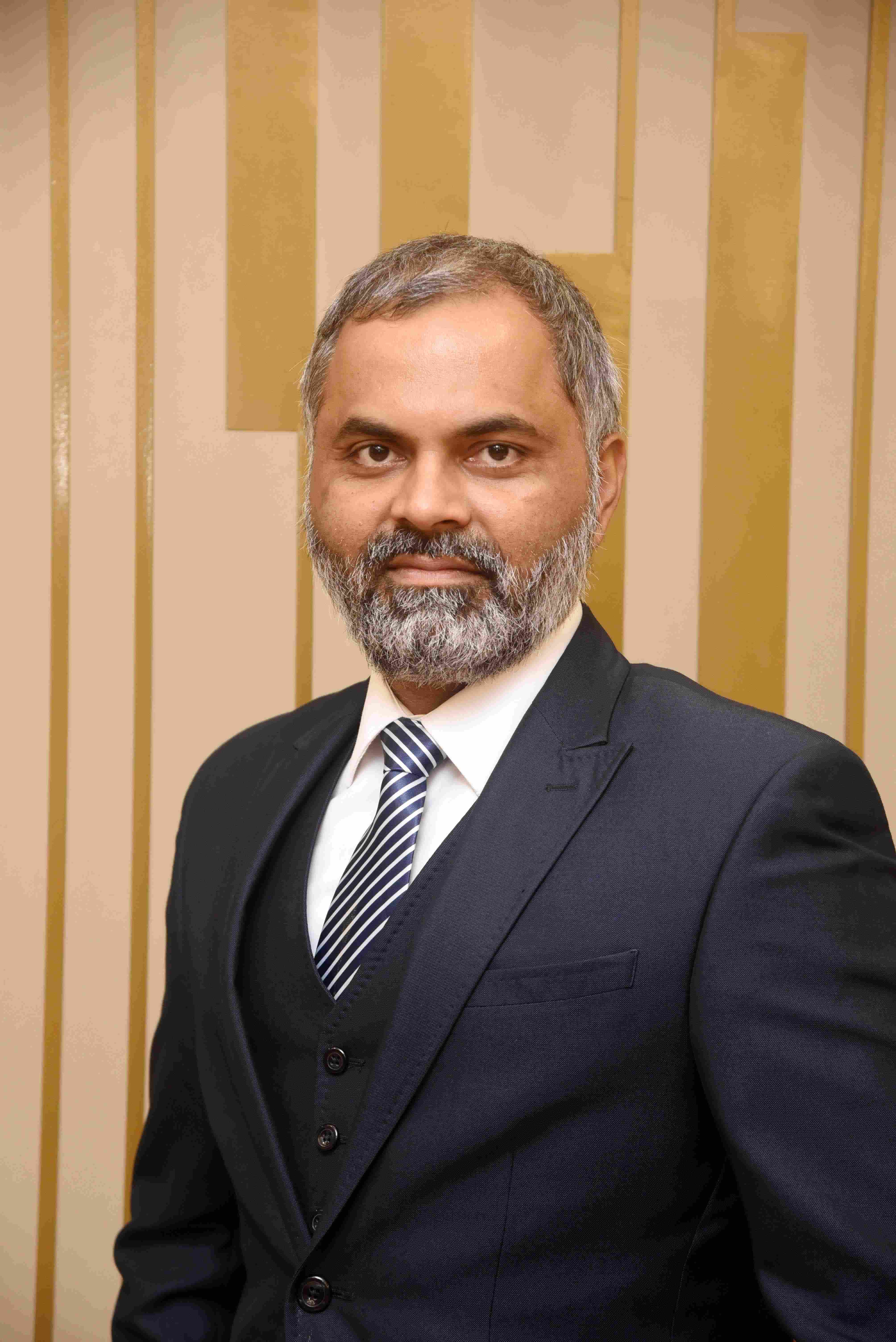
By Ashish
Tiwari, Chief Marketing Officer, Home Credit India
For
generations, saving money has been the bedrock of personal finance in India.
Whether it was putting aside cash for any emergency, opening a fixed deposit,
or starting a recurring deposit, saving was seen as the safest and most
responsible financial habit.
But in
today’s dynamic economic landscape, saving alone isn’t enough. With rising
inflation, evolving financial aspirations, and easy access to digital
investment tools, the conversation is shifting from just saving money to
strategically investing it. This shift isn’t just smart - it’s a necessity.
A tale of
two financial journey
Saving is
essential and will always be a foundational habit. It builds discipline,
provides liquidity, and acts as a safety net for emergencies. However, here’s a
hard truth: Inflation is a silent wealth killer. It quietly erodes the value of
money that’s sitting idle in traditional
savings accounts.
Let’s look
at a tale of two friends, Jitesh and Hitesh, living in India, where the
country’s average inflation rate has hovered around
5–6%.
Jitesh
decided to play it safe and parked ₹1 lakh in a fixed deposit earning around
6.5% annually for 10 years. On the surface, this seemed like a sound choice.
But after factoring in inflation (assuming @5.5%), his return was ~₹1.87L. This
shows that his wealth grew marginally, but barely outpaced rising prices.
Hitesh, on
the other hand, chose a different path. He invested ₹1 lakh in a Nifty 50 index
fund, which has historically delivered returns of 12–14% annually
over the last decade. After adjusting for inflation, his investment grew to
around ₹3.11 lakh after 10 years. This shows significant wealth creation.
The
difference is clear: Both started with the same amount for the same duration —
but only one leveraged the power of compounding through smart investing. It’s a
strong reminder that true wealth isn’t built by just saving, but by making your
money work harder than inflation. That’s the power of compounding returns and
long-term planning.
Investing
is all about growth
When
people hear the word investing, they often think it’s only for the wealthy or
for those who are willing to take big risks. But that’s a myth. At its core,
investing simply means putting your money to work so it grows over time.
Unlike
saving, which is about preserving money in a secure, low-risk manner, investing
is about growth. It’s about choosing financial instruments like Mutual Funds,
Stocks and ETFs, Public Provident Fund (PPF), Real Estate Investment Trusts
(REITs), Digital Gold, Pension Plans and ULIPs etc. that have the potential to
earn returns higher than inflation.
Investing today is easy,
intuitive, and mobile-first. With low entry barriers, user-friendly apps, and
bite-sized options like SIPs (Systematic Investment Plans), index funds, and
digital gold, even first-time investors can get started with just ₹500 a month.
A Simple and Smart Roadmap to Grow
Your Wealth
Here’s a
simple and smart roadmap for different
stages of life:
·
In Your 20s: Build the Habit
Start small but start early. Your greatest asset is
time. Even a small SIP of ₹500–₹1,000 per month in an index fund or ETF can
grow significantly over 10–20 years, thanks to compounding.
·
In Your 30s–40s: Grow and Diversify
This is your wealth-building phase. Align investments
with life goals like buying a home or securing your child’s future. Consider a
mix of PPF, REITs, term insurance with ULIPs, and diversified mutual funds,
with monthly investments ranging from ₹5,000 to ₹25,000 based on your financial
objectives.
·
In Your 50s and Beyond: Focus on Stability
Shift your focus to capital preservation and income
generation. Explore safer options like annuity plans, Senior Citizen Savings Schemes,
fixed deposits, and balanced mutual funds.
Saving is
the start, but investing builds the future
Today’s
earners — especially Gen Z and Millennials — are shifting from a save-only
mindset to one that embraces purposeful investing. Financial stability in this
new era isn’t defined by how much you save, but by how effectively your money
grows. And with digital tools making investing accessible, starting is no
longer hard — it’s just a tap away. Home
Credit India’s financial literacy initiative Paise Ki Paathshala, for
instance, educates and empowers customers with smart money management skills.
Remember,
wealth creation doesn’t require perfection — it requires action. You don’t need
a lot of capital or deep financial knowledge to begin. You just need to start —
smart, early, and consistently. When you invest, you are not just storing money
— you are participating in the growth of the economy. You are funding
companies, backing innovation, and supporting industries that, in return,
reward you through dividends, interest, or capital appreciation.
Think of
it this way: saving is like rowing a boat with one oar. You’ll move, but slowly
— and in circles. Investing is the second oar. When both work together, you
gain balance, speed, and direction in your financial journey and make your
#ZindagiHit.