~ Proposed MSP framework to address rising
production costs, ensure better returns for tea growers, support small tea
growers and strengthen long-term sustainability ~
Kolkata: A 10-member committee constituted by the Tea Board of
India has recommended the introduction of a Minimum Sustainable Price (MSP)
for tea, marking an important step towards addressing the widening gap between
production costs and market realisations in the Indian tea industry. Welcoming
the recommendation, the Indian Tea Association (ITA), Tea Association of India
(TAI), United Planters' Association of Southern India (UPASI), Confederation of
Indian Small Tea Growers Associations (CISTA) and Federation of Indian Tea
Manufacturers Association (FITMA) have emphasised the need for a sustainable
pricing framework to secure remunerative returns for tea producers, protect the
interests of small tea growers and ensure the long-term viability of the
sector.
India, the
world's second-largest tea producer, produces approximately 1,350-1,400 million
kg of tea annually, with small tea growers contributing nearly 55% of the
country's total production. However, the industry continues to face mounting
financial pressures, with production costs increasing significantly faster than
tea price realisations. Over the years, tea prices have registered a marginal
compound annual growth rate (CAGR) of approximately 2-3%, as compared to an
estimated CAGR of 10-14% in input costs. This growing disparity has affected
producers' ability to sustain operations, invest in replantation, improve
productivity and maintain quality standards.
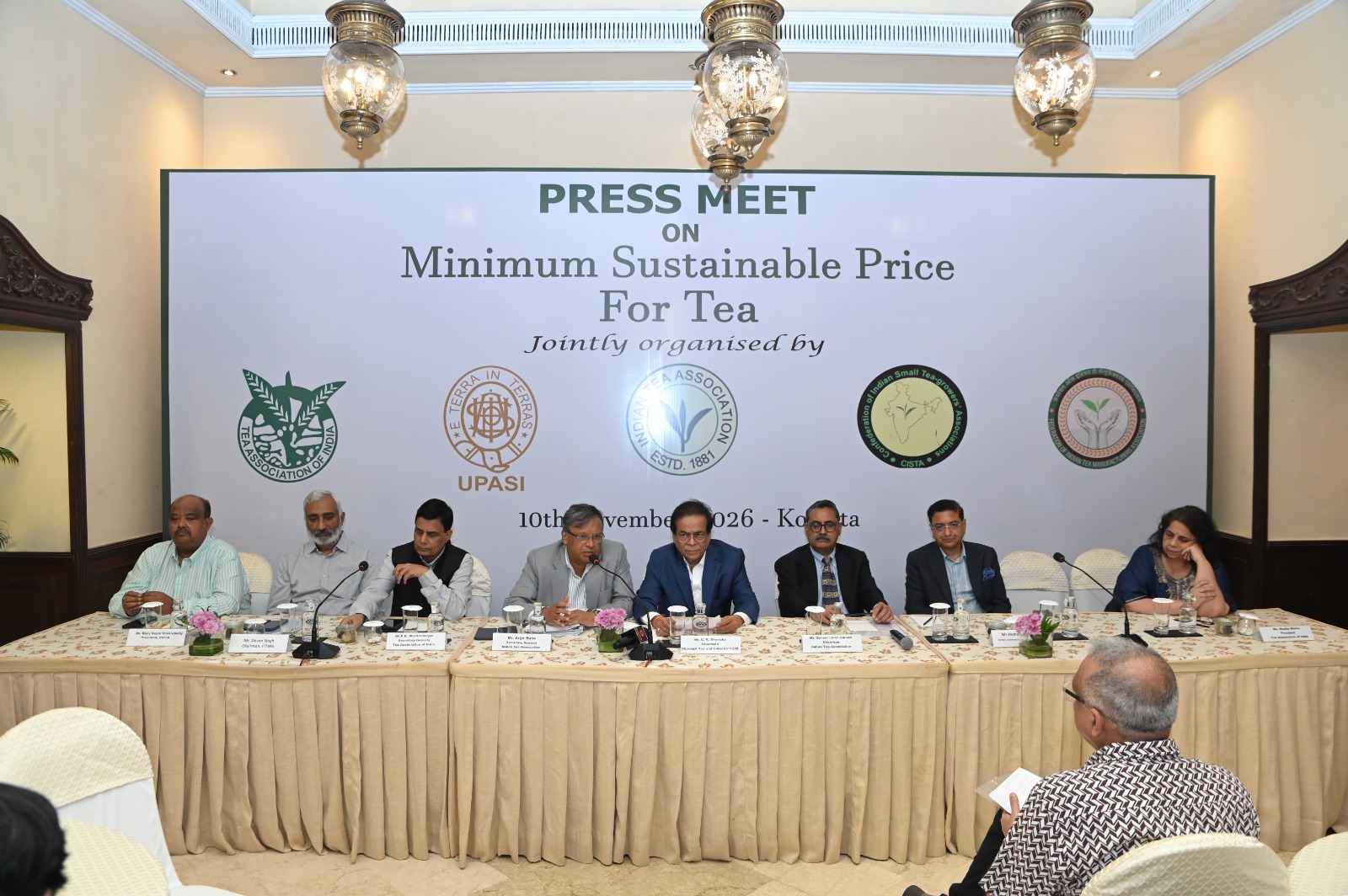
The press
conference brought together senior representatives of the five industry
associations, representing diverse segments of the tea value chain, including
organised tea estates, small tea growers and bought-leaf factories. The
discussions highlighted the need for a pricing framework that recognises the
varying economic realities of the sector while ensuring the sustainability of
tea production across regions.
Mr. C.K. Dhanuka, Chairman, Dhunseri Tea
and Industries, said, “The tea industry is confronted with mounting cost
pressures, while tea price realisations have remained relatively stagnant. With
further increases in wage costs anticipated pursuant to the implementation of
the Code on Wages, the financial viability of tea producers is likely to face
additional challenges. A Minimum Sustainable Price framework is therefore essential
to bridge the widening gap between production costs and market realisations and
to ensure the long-term sustainability of the industry. A Minimum Sustainable
Price will help bring realisations in line with costs, so that the industry can
protect accommodate wage revisions, protect employment and the competitiveness
of Indian tea.”
The
recommendation for an MSP assumes particular significance given the structural
challenges confronting the industry. Employment costs account for approximately
60% of the total cost of tea production, making producers particularly
vulnerable to wage increases. With the anticipated notification of floor wages
by the Central and State Governments under the Code on Wages, tea producers are
expected to face further increases in operating costs.
To address these
concerns, the Committee has recommended a composite index reflecting wage
movements and the Consumer Price Index (CPI) for determining the benchmark MSP.
It has also proposed periodic reviews of the benchmark to ensure that the
pricing framework remains aligned with changes in production costs and
inflation.
Key Benefits
of a Minimum Sustainable Price for the Tea Industry
The introduction
of a Minimum Sustainable Price is expected to deliver wider benefits across the
tea value chain; key expected benefits include:
- Enabling the industry to better accommodate future
increases in wages and salaries arising from anticipated notifications
under the Code on Wages. This will be a win-win situation for the tea
estate workers and small growers.
- Improving the financial viability and
sustainability of the tea industry, creating a stronger foundation for the
sustained production of quality Indian tea.
- Supporting better and more stable returns for small
tea growers and registered tea gardens, strengthening their ability to
maintain operations and adhere to quality benchmarks.
- Encouraging improvements in the quality of green
leaf and made tea, enhancing the global image of Indian tea and
strengthening its export competitiveness.
Mr. Suneel
Singh Sikand, Chairman, Indian Tea Association, said, “The
recommendation for a Minimum Sustainable Price is an important policy
intervention towards addressing the structural challenges confronting the
Indian tea industry. Ensuring remunerative returns to producers is critical to
sustaining operations, facilitating investment in replantation and productivity
enhancement and securing the industry's long-term sustainability.”
Strengthening
Regional Sustainability and Competitiveness
The proposed MSP
framework also needs to account for the diverse economic realities of India's
tea-growing regions. Differences in agro-climatic conditions, production
practices, productivity levels and operating costs influence the economics of
tea cultivation across regions. A responsive pricing mechanism that recognises
these variations will be important in ensuring that producers across the
country can sustain operations while maintaining the competitiveness of Indian
tea.
Ms. Shailja
Mehta, President, Tea Association of India, said, “The proposed Minimum
Sustainable Price framework represents an important step towards strengthening
the economic sustainability of the Indian tea industry. Improved financial
viability will enable producers to maintain quality standards, invest in modernisation
and productivity enhancement, and respond more effectively to evolving market
requirements. This will be vital in reinforcing the global standing and
competitiveness of Indian tea.”
The introduction
of an MSP is expected to improve the financial viability of tea producers,
enable better returns for small tea growers and registered tea gardens, and
create greater scope for investments in cultivation, processing and quality
enhancement. Improved financial sustainability will also support investments in
modernisation, productivity enhancement and quality standards, strengthening
India's position in the global tea market.
Mr. Sanjith
R. Nair, Secretary General, United Planters' Association of Southern India
(UPASI), said, “The proposed Minimum Sustainable Price framework is an
important step towards addressing the diverse economic realities of India's
tea-growing regions. Given the varying agro-climatic conditions, production
practices and cost structures across regions, it is essential that the
framework remains responsive to these differences while ensuring the overall
sustainability and international competitiveness of Indian tea.”
Supporting
Small Tea Growers and the Wider Industry
The proposed MSP
framework assumes particular significance for small tea growers, who contribute
approximately 55% of India's total tea production. While small growers depend
on the prices received for freshly harvested green leaf, bought-leaf factories (BLFs)
procure these leaves and process them into made tea for sale.
When the prices
realised from the sale of made tea are insufficient to cover processing costs
and support sustainable procurement prices, factories face pressure on the
prices they can offer small growers. This has a cascading impact across the
supply chain. A well-designed MSP mechanism could help address this imbalance
by supporting sustainable green-leaf prices while recognising the distinct cost
structures and economic circumstances of small growers, bought-leaf factories
and organised tea estates.
Mr. Bijoy
Gopal Chakraborty, President, Confederation of Indian Small Tea Growers
Associations (CISTA), said, “Small tea growers constitute a significant
segment of India's tea industry and contribute substantially to domestic tea
production. Their economic viability is intrinsically linked to the prices
realised for green leaf. A properly structured Minimum Sustainable Price
mechanism would help ensure more remunerative and stable returns for small tea
growers, thereby safeguarding their livelihoods and supporting the sustainable
growth of this important segment.”
Bought-leaf
factories form an important link in this ecosystem by providing market access
to small tea growers and converting green leaf into made tea. Their financial
sustainability is closely linked to the relationship between green-leaf
procurement prices, processing costs and made-tea price realisations. Ensuring
viable operations for these factories is therefore equally important to
maintaining stability across the tea value chain.
Mr. Deven
Singh, Chairman, Federation of Indian Tea Manufacturers Association (FITMA),
said, “Bought Leaf Factories (BLFs) form a critical link in the tea
value chain by providing market access to small tea growers and converting
green leaf into made tea. Their sustainability is closely linked to the
relationship between green leaf procurement prices, processing costs and
made-tea price realisations. The proposed Minimum Sustainable Price framework
must adequately recognise the operating economics of BLFs while ensuring viable
returns across the value chain.”
The Committee's
recommendations are expected to provide an important policy foundation for
addressing the structural challenges facing tea producers and strengthening the
economic sustainability of the sector.
The industry
associations expect the Ministry of Commerce, Government of India, to take
favourable note of the Committee's recommendations and notify the Minimum
Sustainable Price for tea at the earliest.
A financially
sustainable tea industry is essential not only for the continued production of
quality Indian tea but also for safeguarding the livelihoods of millions of
people dependent on the sector and strengthening India's position in the global
tea market.